
Last updated August 25, 2026
Free on-site gate assessment - hinges, posts, and your LiftMaster or Nice gate operator checked before anything is quoted
The assessment is free and the quote is the invoice.

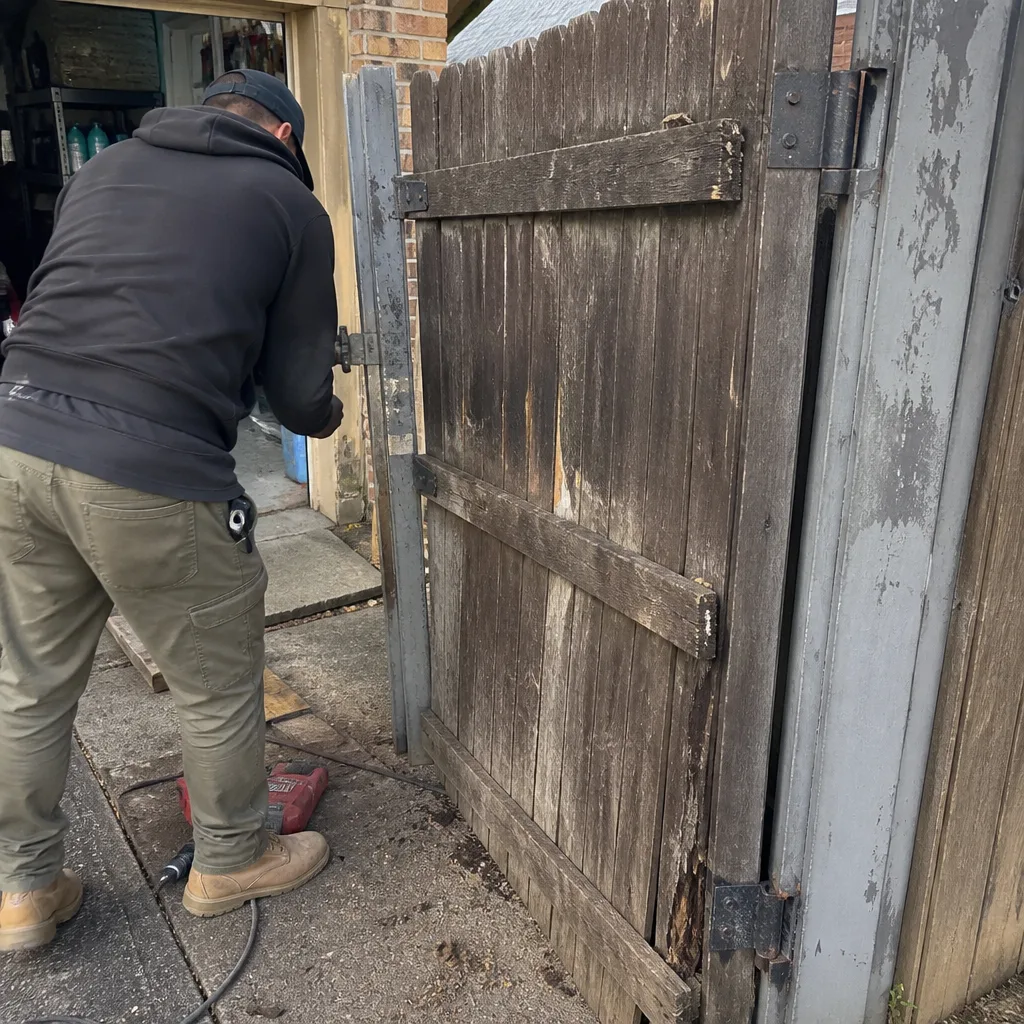 Before
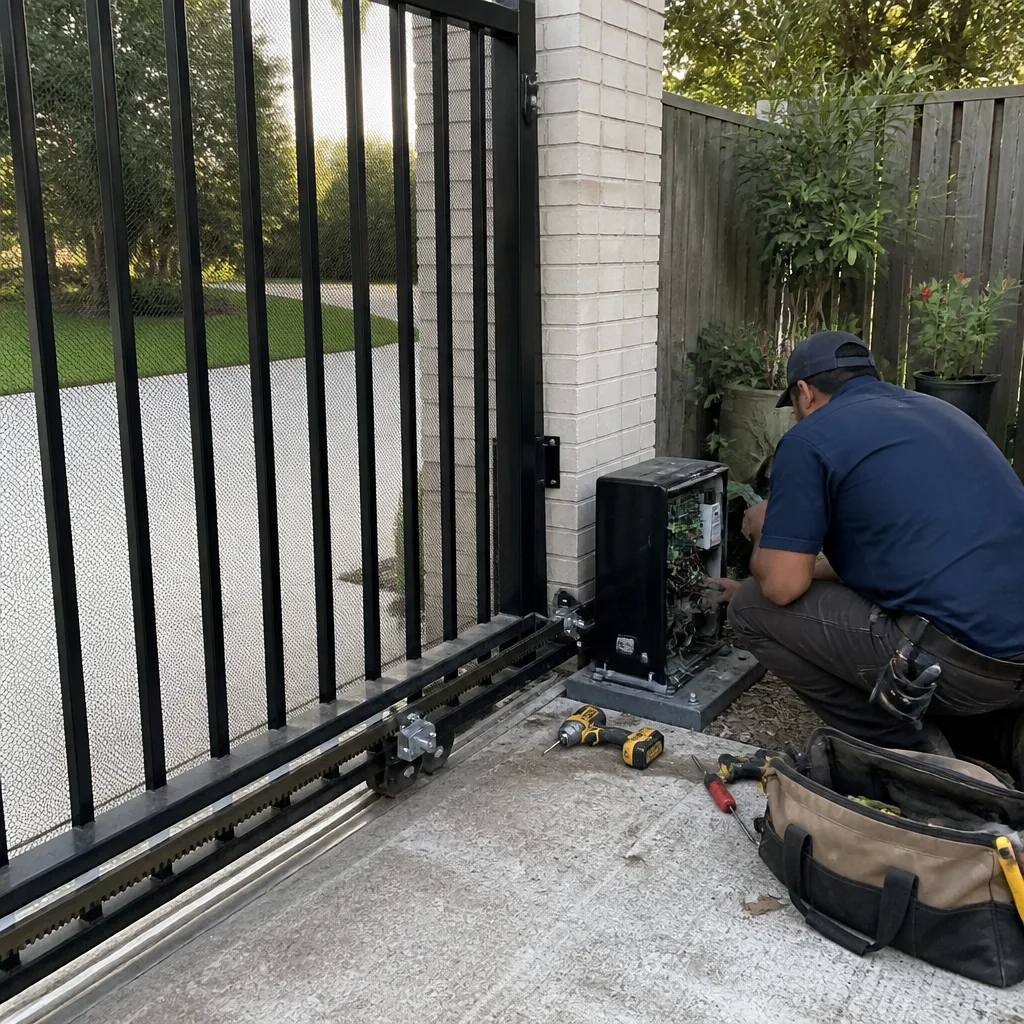 After
After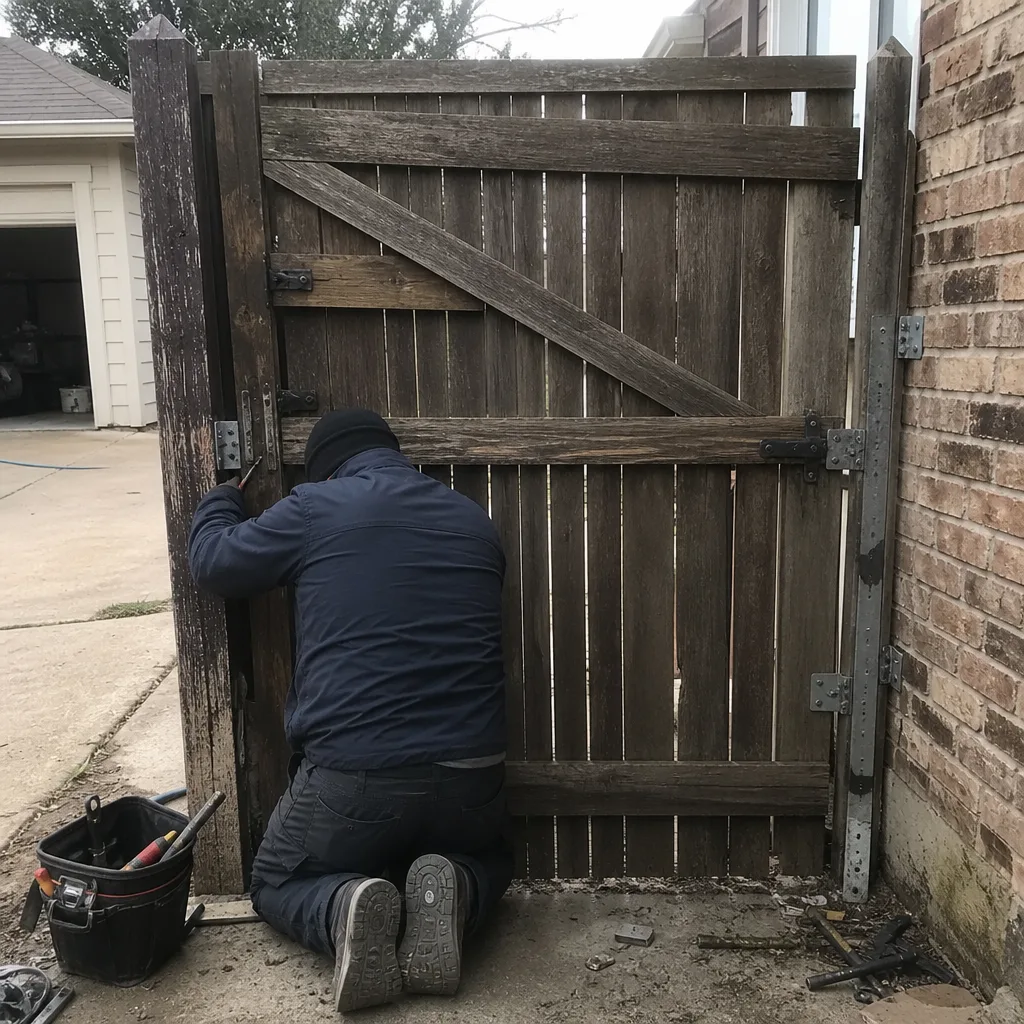 Before
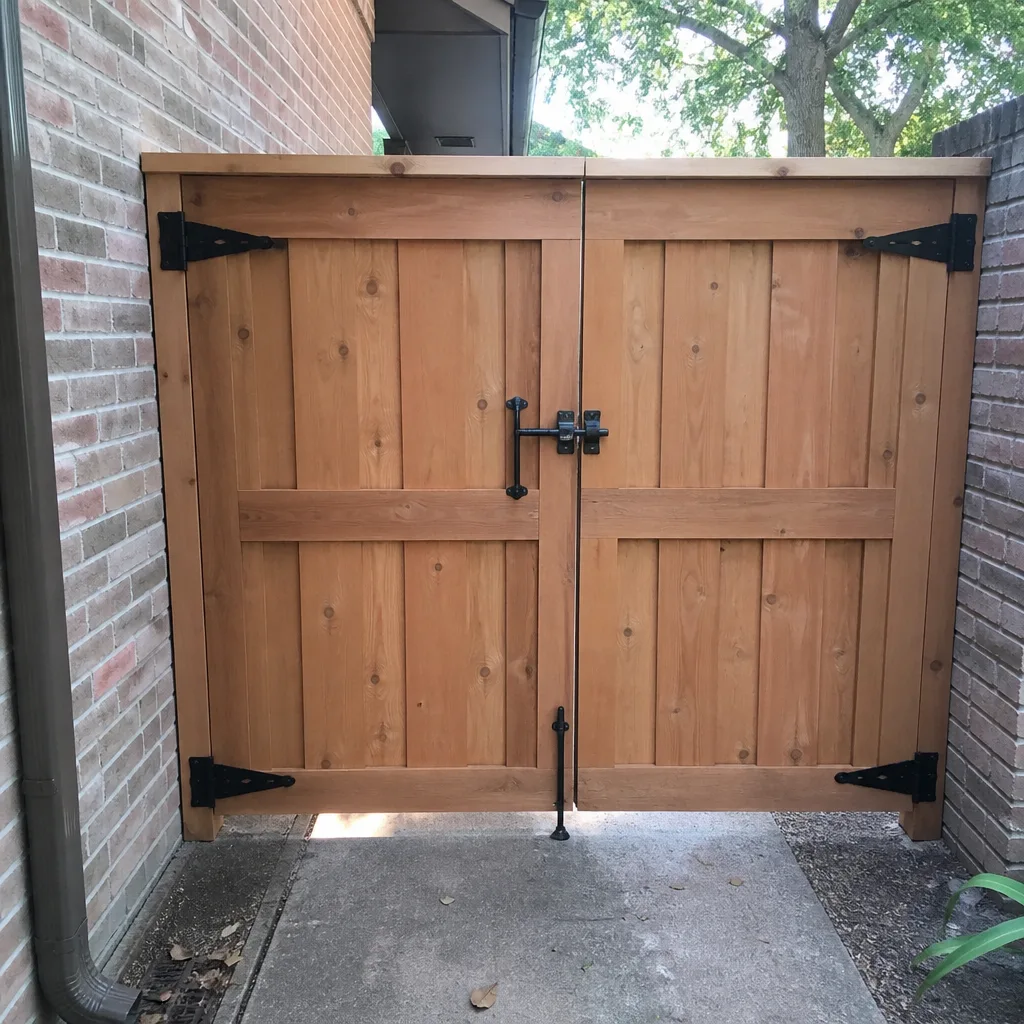 After
After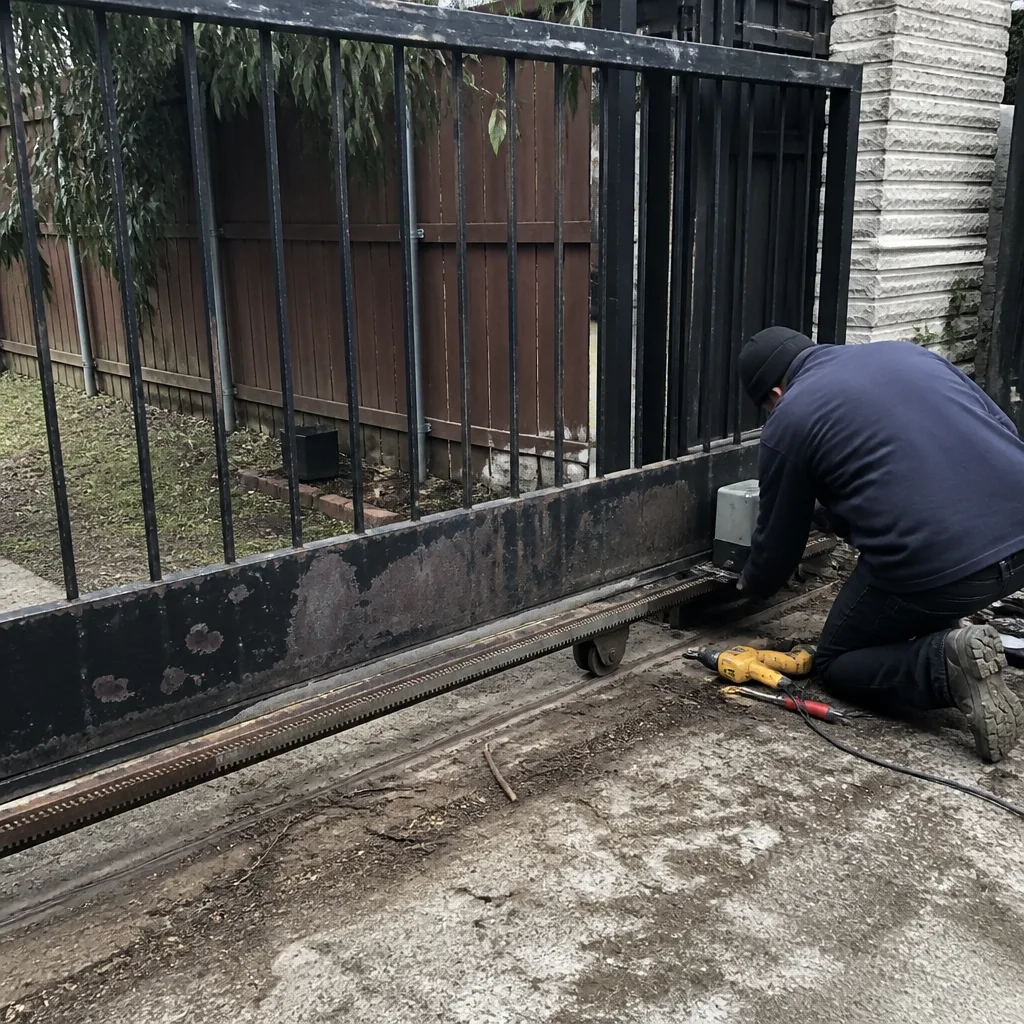 Before
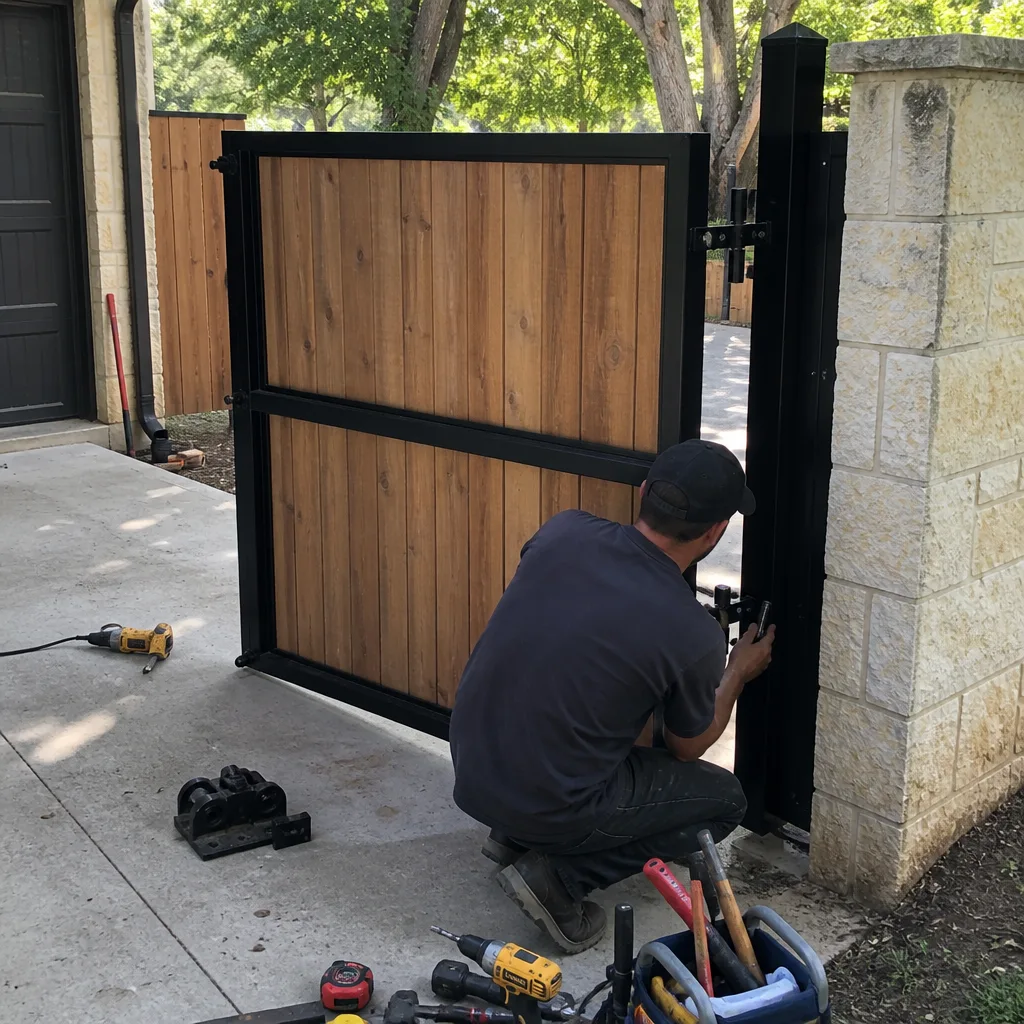 After
AfterSeasonal Gate Repair Care for Richardson: Year-Round Homeowner’s Guide
Most gate failures in Richardson don’t happen during the storm that finally breaks something. They happen three months earlier, on a mild afternoon, when a small problem went unnoticed and quietly got worse. Homeowners often think of gate repair as an emergency service, but the reality is that nearly every major repair we perform in Richardson traces back to a maintenance issue that was visible and fixable weeks before it became a breakdown. This guide walks through what the shifting North Texas seasons do to driveway gates, what to check each quarter, and how to handle problems before they strand your car on the wrong side of the gate.
Quick Answer
Seasonal gate care in Richardson means checking hinges, wheels, and opener force settings each quarter, paying special attention to the spring rainy season and the late-summer heat that stresses motors and batteries. A 20-minute visual inspection four times a year prevents most breakdowns, and when something does fail, a gate specialist can usually repair it on the first visit for less than a full replacement.
Table of Contents
- Why Richardson’s Climate Is Hard on Gates
- Spring Care: After the Rains
- Summer Care: Heat, Motors, and Batteries
- Fall Care: Before the First Freeze
- Winter Care: Cold Snaps and Wet Ground
- The 10-Minute Monthly Gate Checklist
- Common Mistakes to Avoid
- When to Call a Professional
- Frequently Asked Questions
- The Bottom Line
Why Richardson’s Climate Is Hard on Gates
Richardson sits in a climate band that punishes outdoor metal and electronics in three specific ways. First, the clay soil under most of the city expands and contracts dramatically with moisture. During wet springs, the ground swells and shifts. During dry summers, it shrinks and cracks. That movement transfers directly to gate posts, hinges, and tracks. A gate that swings perfectly in April can drag on the ground by August, not because anything bent, but because the post it hangs from tilted a quarter inch in the shifting soil.
Second, Richardson gets intense, short-duration storms. Hail, high wind gusts, and rapid temperature swings are all normal here. Wind loads on a solid wood or metal gate panel are significant. A gate acts like a sail, and repeated wind stress loosens hinge bolts, stretches chain tension, and stresses the opener’s internal gears even when the gate isn’t being used.
Third, the combination of high heat and high humidity in July and August is a real problem for electronics. Circuit boards expand and contract with temperature. Condensation forms inside control boxes when hot, humid air meets cooler shaded components. We’ve opened plenty of control boxes in Richardson in mid-August and found corrosion damage that looked like it came from a coastal climate, not North Texas. Homeowners who understand those three forces are already ahead of most of their neighbors.
Spring Care: After the Rains
Spring in Richardson is the season when gates show you what the winter did to them. March through May brings the heaviest rainfall of the year, and that moisture works its way into every place it shouldn’t be: hinge pins, roller bearings, chain links, electrical junction boxes. By the time the rain stops, structural problems that were invisible in January are suddenly obvious.
Start with the gate posts. Walk to each post and push the gate gently from side to side. If you see movement at the base of the post, even slight movement, that’s a developing structural problem. In Richardson’s clay soil, a post that moves in the spring will lean visibly by fall. A gate specialist can reset and brace it now for a fraction of what it costs to rebuild a fallen gate assembly later.
Then check the hinges and rollers. Look for rust streaks running down from hinge pins, which means water has gotten past the grease and is corroding the bearing surface inside. Listen for grinding or squealing when the gate moves. A dry bearing wears quickly, and a worn bearing lets the gate sag, which puts strain on the opener motor that it was never designed to handle.
Finally, open the control box and look for signs of moisture: water stains, white corrosion powder on the circuit board, or condensation beads on the inside of the lid. Many Richardson homes have opener control boxes mounted on posts or low walls, and driving rain from spring storms gets into boxes that were sealed properly when installed but whose gaskets have aged and cracked. A $15 gasket replacement in April can prevent a $400 circuit board failure in July when the heat hits and the corrosion finally causes a short.
Spring Gate Care Steps
- Inspect both gate posts for movement, cracking, or rust where they meet the ground.
- Open and close the gate manually (use the release on the opener) and feel for drag, grinding, or binding.
- Grease hinge pins and roller bearings with a lithium-based grease, not WD-40.
- Check the control box for moisture, corrosion, or insect nests.
- Tighten every visible bolt and screw on the gate frame, hinges, and opener mounts.
- Test the safety reversing mechanism by placing a 2×4 in the gate’s path and closing it. The gate should reverse before making contact.
Summer Care: Heat, Motors, and Batteries
Richardson summers push gate openers to their thermal limits. Surface temperatures on a black metal gate in August can reach 150 degrees or more, and the heat radiates directly into the opener housing, the battery enclosure, and the wiring connections. Heat is the primary cause of premature battery failure in gate openers, and Richardson homeowners replace more backup batteries in August and September than any other months of the year.
Batteries used in gate openers are typically sealed lead-acid or lithium types. Both have a rated operating temperature range, and sustained exposure above that range shortens their service life significantly. A battery that lives inside a metal box bolted to a hot gate post in Richardson is effectively aging at double or triple the normal rate during the hottest months. Listen for a sluggish gate at the end of a hot day. A gate that opens and closes fine in the morning but slows down noticeably at 4 p.m. is usually telling you the battery is weakening and the motor is compensating.
Heat also affects the motor itself. Most residential gate opener motors have a thermal overload protection circuit that shuts the motor off when internal temperatures exceed safe limits. That’s a protective feature, not a defect, but when it trips repeatedly, the motor is working too hard. The cause is usually mechanical drag somewhere in the gate: a hinge that’s binding, a wheel that isn’t rolling freely, a chain that’s too tight. Fixing the mechanical resistance solves the overheating. Ignoring it eventually burns out the motor windings.
Keep the control box shaded if possible. If the box faces west or south and gets direct afternoon sun, consider adding a simple shade panel. Just don’t enclose it tightly: electronics need airflow. In our experience in Richardson, control boxes that stay under 120 degrees internally last about twice as long as boxes exposed to afternoon sun.
Fall Care: Before the First Freeze
Fall is the most important maintenance season in Richardson, not because fall weather is harsh but because winter weather is unpredictable here. North Texas winters rarely get extreme, but a single hard freeze with moisture present can do a year’s worth of damage to a gate in one night. Fall maintenance closes the gaps that winter exploits.
The priority in fall is sealing. Check weatherstripping around the control box, replace cracked gaskets, and reseal any wire penetrations with silicone caulk. Water that gets into a control box and then freezes expands and cracks the circuit board substrate. That’s a failure we see in Richardson every winter, and it’s almost always traceable to a seal that failed the previous fall.
Adjust the gate’s force settings. Cold weather makes metal contract, which changes the geometry of the gate slightly. A gate that was balanced and smooth in October can bind when the temperature drops into the twenties. The opener’s force setting is the adjustment that controls how hard the motor pushes before it reverses. If it’s set too low for winter conditions, the gate will reverse when it shouldn’t. If it’s set too high, the gate becomes a safety hazard because it won’t stop when it meets an obstruction. This is one adjustment that’s worth having a professional make. Force settings are a safety-critical adjustment on any gate opener brand, and setting them wrong is dangerous.
Fall is also the season to check the gate’s ground clearance. If the gate has settled during the summer dry season, it may be dragging or nearly dragging in October. That’s fine in dry weather, but when winter rains come and the clay soil swells, the ground rises and the gate will dig in. Raise a dragging gate in the fall, before the wet season, and it will work through the winter without issue.
Winter Care: Cold Snaps and Wet Ground
Richardson winters are generally mild, but the cold snaps matter. When temperatures drop below freezing, two things happen to gates: the metal contracts, and any water present turns to ice. A gate that has a quarter-inch gap between the bottom edge and the ground in December may have no gap at all in January when the ground is wet and slightly elevated, and a gate that touches frozen ground binds fast.
Listen to the opener motor during cold mornings. A gate that moves more slowly in the cold is working against extra resistance, and extra resistance means more current draw on the motor and more wear on the gears. Cold weather is when we often see stripped plastic drive gears inside opener units. The motor is strong enough to move the gate in normal conditions, but when cold weather adds resistance and the force setting is wrong, the plastic gears are the part that fails. That repair is common and not particularly expensive, but it’s preventable by keeping the gate moving freely through the fall and winter.
Ice is a gate’s enemy. Never try to force a gate open when ice is visible on the ground track or in the hinges. The opener will try, and something will break. If the gate is frozen shut, wait for the ice to melt or use warm water (never hot water on cold metal, which can crack paint and cause thermal shock) to free the contact points. Once the gate is free, run it through a complete cycle manually before re-engaging the opener.
Winter is also when backup batteries are tested for real. Power outages in Richardson are more common during winter storms than any other time, and a gate opener that loses power without a functioning backup battery means you can’t open the gate from inside the car. Test the battery by unplugging the opener and running the gate once. If it doesn’t complete the cycle smoothly, the battery needs replacement.
The 10-Minute Monthly Gate Checklist
A monthly check takes less time than a coffee break and catches nearly every problem before it becomes a repair call. This is the routine we recommend to homeowners in Richardson who want their gate to last twenty years without a major rebuild.
- Look at the gate from the street. Is it level? A gate that sags or leans has a developing hinge or post problem.
- Open and close it once manually. Use the opener release and push the gate through its full travel. Feel for drag, hear for grinding, watch for stuttering.
- Listen to the opener during automatic operation. It should sound smooth, not laboring. A change in sound over time means wear.
- Check the safety eyes and reversing mechanism. Wave your hand in front of the safety sensor while the gate is closing. The gate should reverse immediately.
- Inspect the chain or belt tension. A chain that sags more than an inch is loose and wearing the sprockets.
- Look at the control box. Signs of moisture, bugs, or corrosion on the outside mean the inside needs attention.
- Check ground clearance. The gate should clear the ground by at least two inches at all points along its travel.
Common Mistakes to Avoid
- Greasing the wrong parts with the wrong product. Spray lubricants like WD-40 are not gate lubricants. They displace water but leave no lasting film, and they thin out the grease that was already in the bearing. Use a lithium-based grease on hinge pins and roller bearings.
- Ignoring a slowing gate. A gate that moves noticeably slower than it did a year ago is working harder. The cause is almost always mechanical drag, and it won’t fix itself. Every month of extra motor strain shortens the motor’s life.
- Adjusting the force setting without understanding it. The force setting controls the maximum push the motor will apply before reversing. Set too low, the gate won’t close in cold weather. Set too high, the gate becomes dangerous. This is a safety adjustment, not a convenience adjustment.
- Pressure-washing the control box. Pressure washers force water into seals that are designed to keep out rain, not a 2,000 PSI jet. Water inside the control box causes corrosion and circuit board failures. Clean the box with a damp rag instead.
- Painting over rust without treating it first. Paint over surface rust just hides the problem. The rust continues to grow under the paint, and the metal thins from the inside out. Remove rust, treat the surface, then paint.
- Forgetting the safety reverse test. The safety reverse is the mechanism that prevents the gate from crushing a person or pet. In Richardson, most gate openers are required to have a functioning safety reverse. Testing it monthly is a two-minute job that could prevent a serious injury.
- Waiting until the gate fails completely to call. Every major gate repair is cheaper and faster when the first symptom appears. A $50 hinge replacement in March and a $700 welded frame repair in November are the same problem at different stages.
When to Call a Professional
Some gate problems are homeowner-friendly and safe to address with basic tools. Others are not. Call a professional when the gate post is moving or leaning, because a failing post can drop a heavy gate panel without warning. Call a professional for any wiring, circuit board, or motor repair, since gate openers carry line voltage and incorrect wiring can start a fire or cause injury. Call a professional when the gate reverses unexpectedly or won’t close in cold weather: the force settings or safety sensors need calibration, and doing it wrong creates a safety hazard. And call a professional when the gate has been hit by a vehicle, even if the damage looks minor, because the impact may have cracked welds inside the frame that will fail later under load.
Ironworks Gate Co. home is based in Richardson and offers free estimates on all gate repair work. Call (903) 627-2906 to schedule a visit.
Frequently Asked Questions
We recommend a professional tune-up once per year, ideally in the fall before winter temperatures arrive, plus a monthly 10-minute visual inspection you can do yourself. Richardson’s clay soil and spring thunderstorms make annual service more important here than in many other parts of Texas. A professional tune-up includes adjusting force settings, greasing bearings, checking safety systems, testing the backup battery, and torque-checking every fastener. For homeowners who skip annual service, the first symptom is usually a slowing gate or a control board failure after a storm.
Gate repair in Richardson typically runs $150 to $400 for most mechanical issues like hinge replacement, roller replacement, or chain tensioning, while circuit board replacement and motor repair are usually $300 to $600. Complete opener replacement on a single driveway gate is generally $800 to $1,800 depending on the opener brand, whether it’s a LiftMaster, FAAC, BFT, or Linear unit, and the size and weight of the gate. The lowest-cost path is always early intervention: a hinge that gets serviced at the first sign of squeaking is a $100 repair, but a gate that falls off its hinges damages the opener, the frame, and potentially a vehicle. Call (903) 627-2906 for an exact quote, and note that Ironworks Gate Co. offers a free second opinion on any written estimate from another company.
Yes, same-day emergency gate repair is available for Richardson homeowners. A stuck gate is a security problem and a safety problem, not a convenience problem, and it deserves a same-day response. Ironworks Gate Co. answers the phone live 24 hours a day, 7 days a week, and most emergency repair calls in Richardson are completed the same day they’re placed. Call (903) 627-2906 and you’ll speak to a person, not a voicemail tree.
An $89 seasonal tune-up through Ironworks Gate Co. includes a full mechanical inspection of hinges, rollers, tracks, and gate frame, belt or chain tension adjustment, battery testing, safety reverse testing, force setting verification, and lubrication of all moving parts. The technician goes through the opener control board and power supply as well, looking for signs of heat damage or moisture intrusion. The tune-up takes about an hour and ends with a written summary of what was checked and what, if anything, may need attention before the next season.
The maintenance steps are the same for all major opener brands, including LiftMaster, FAAC, BFT, and Linear, but the adjustment procedures and diagnostic codes are brand-specific. A homeowner can do the monthly visual inspection and lubrication on any opener, but force adjustments and board-level troubleshooting should be done by a technician familiar with that specific brand. Ironworks Gate Co. technicians are trained and equipped on nine leading gate-automation brands, so the correct fix is made on the first visit, whatever is mounted on the driveway.
Most homeowner’s insurance policies in Richardson cover gate damage from covered perils like windstorms, hail, vehicle impacts, or lightning, but they do not cover maintenance or wear-and-tear failures. A gate that fails because a hinge wore out after fifteen years is a maintenance issue, not an insurance claim. A gate that’s damaged by a falling tree limb during a Richardson thunderstorm is typically covered. Check your specific policy, and keep photos and records of maintenance: insurance adjusters often deny claims they suspect were caused by deferred upkeep.
The Bottom Line
A driveway gate in Richardson is a mechanical system living in a hostile environment: clay soil that shifts, thunderstorms that stress, heat that cooks, and the occasional freeze. The homeowners who get twenty years out of their gates are not the ones with expensive gates; they’re the ones who spend ten minutes a month looking, listening, and tightening. When professional help is needed, the difference between a $150 repair and a $1,500 replacement is usually the time between the first symptom and the phone call. Attend to the seasons, fix small problems early, and your gate will outlast most of the vehicles that drive through it.
Written by Victor Salinas, Owner at Ironworks Gate Co., serving Richardson since 2013.