
Last updated August 25, 2026
Free on-site gate assessment - hinges, posts, and your LiftMaster or Nice gate operator checked before anything is quoted
The assessment is free and the quote is the invoice.
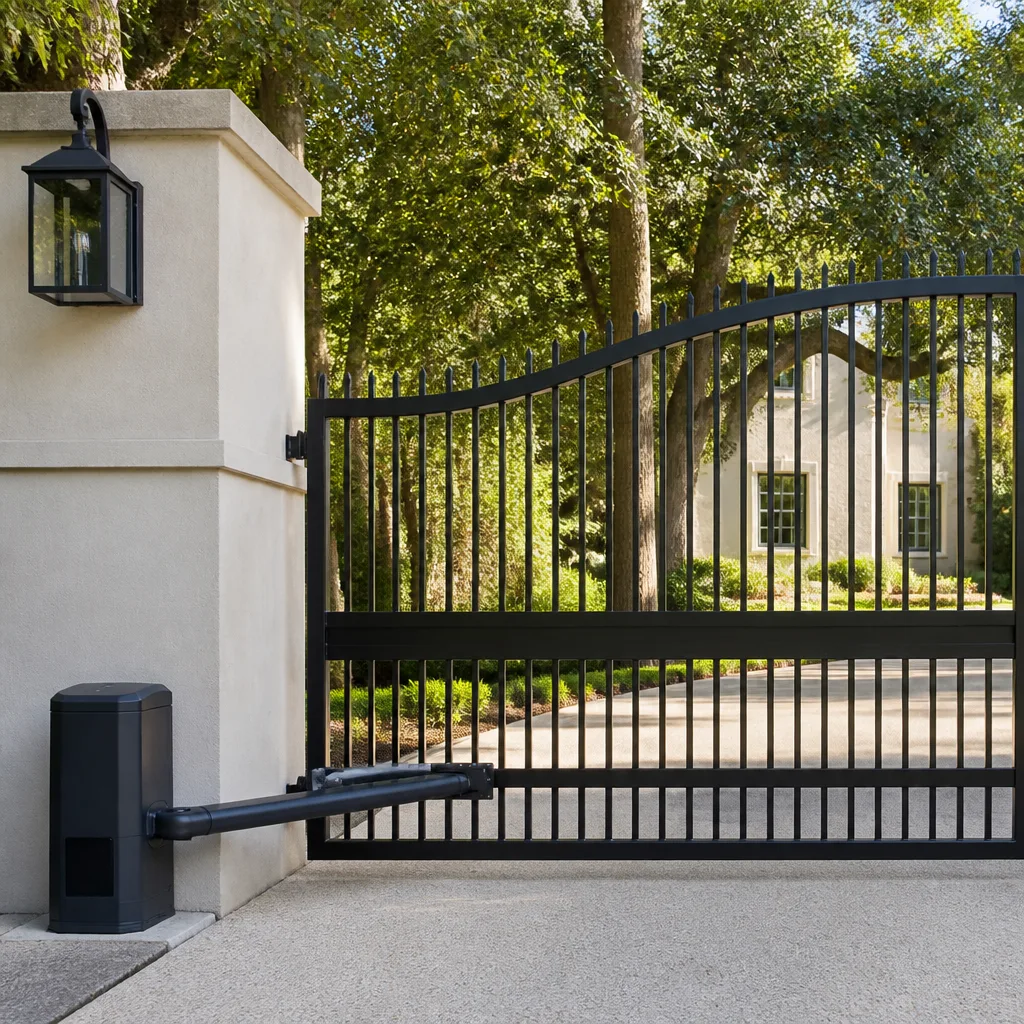
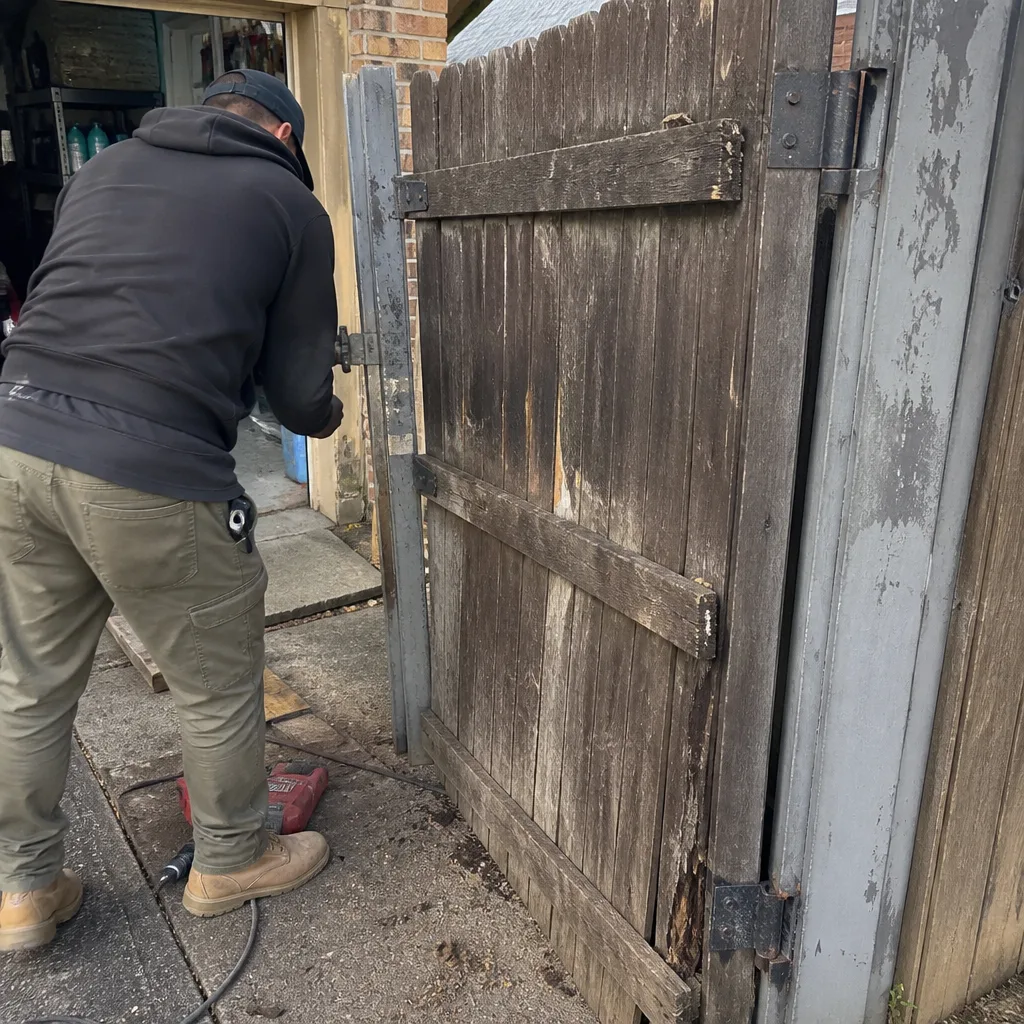 Before
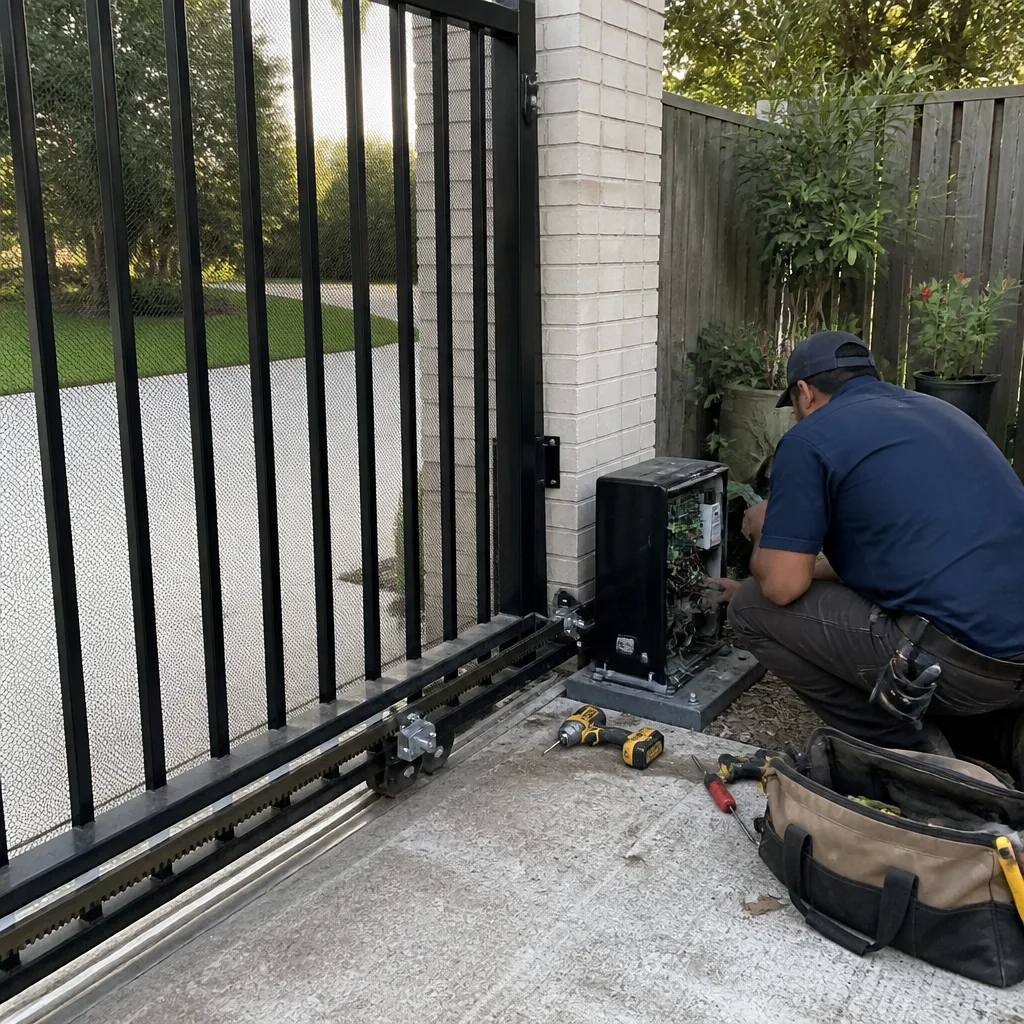 After
After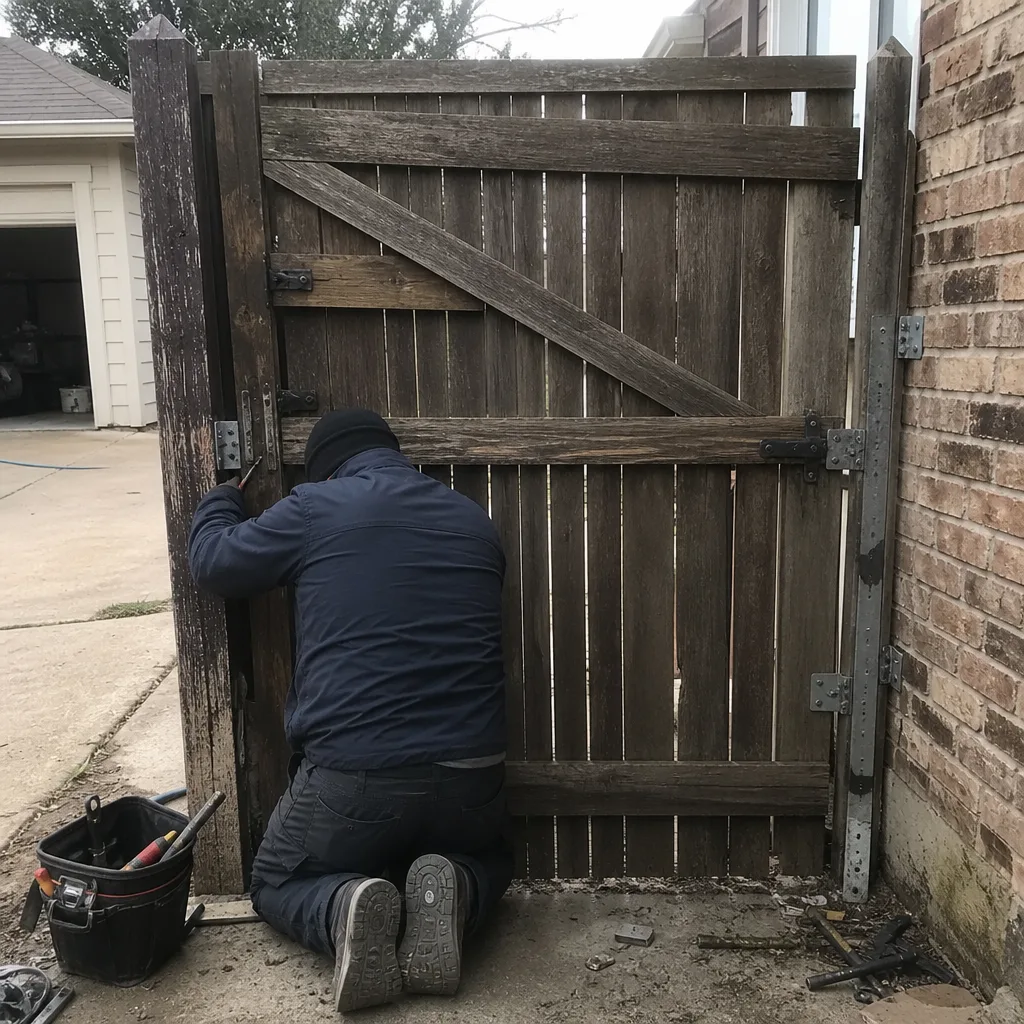 Before
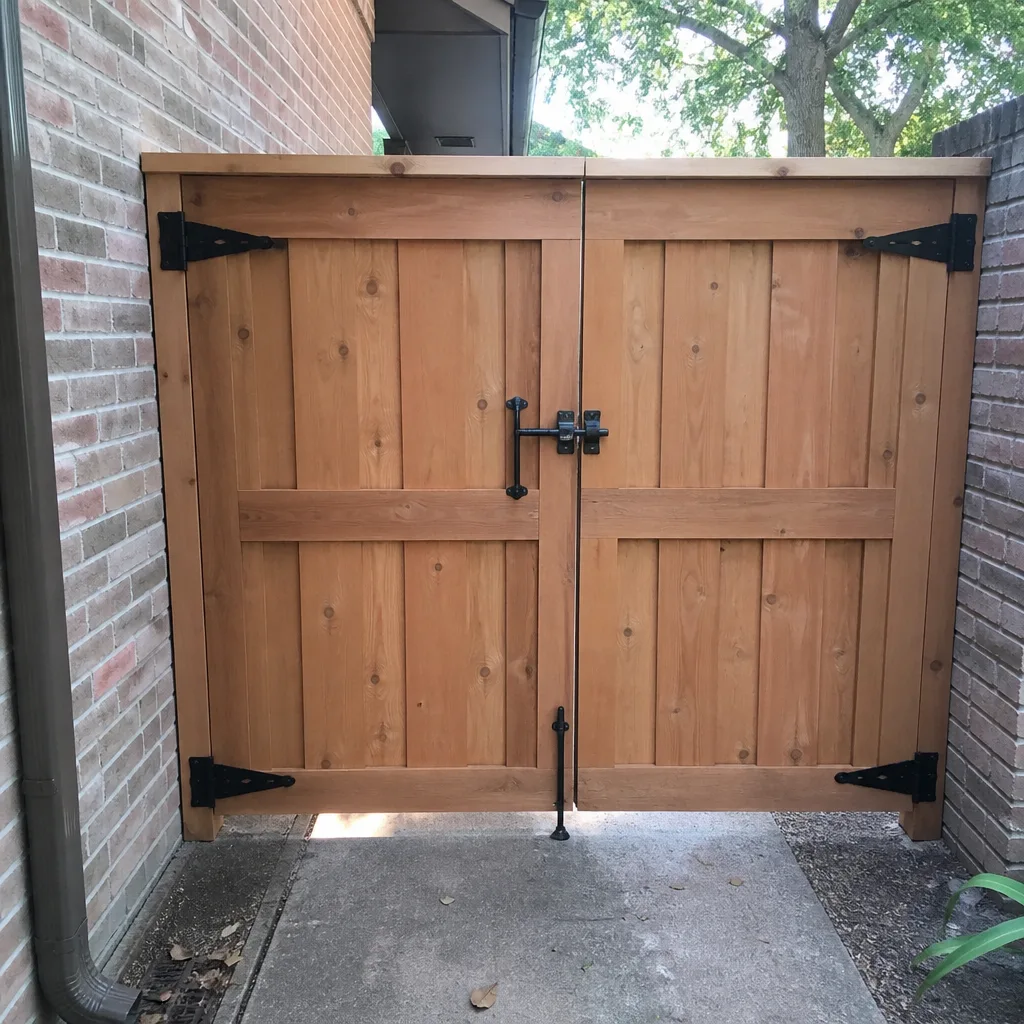 After
After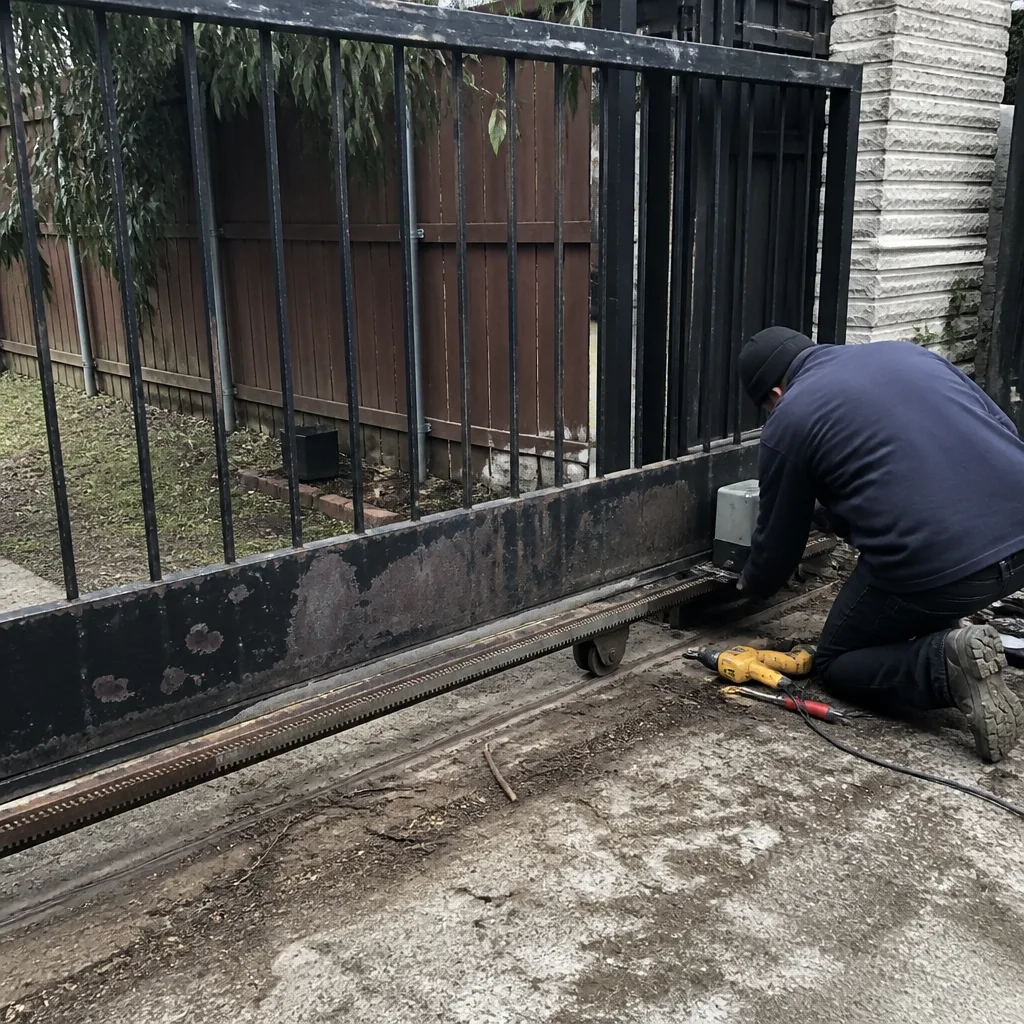 Before
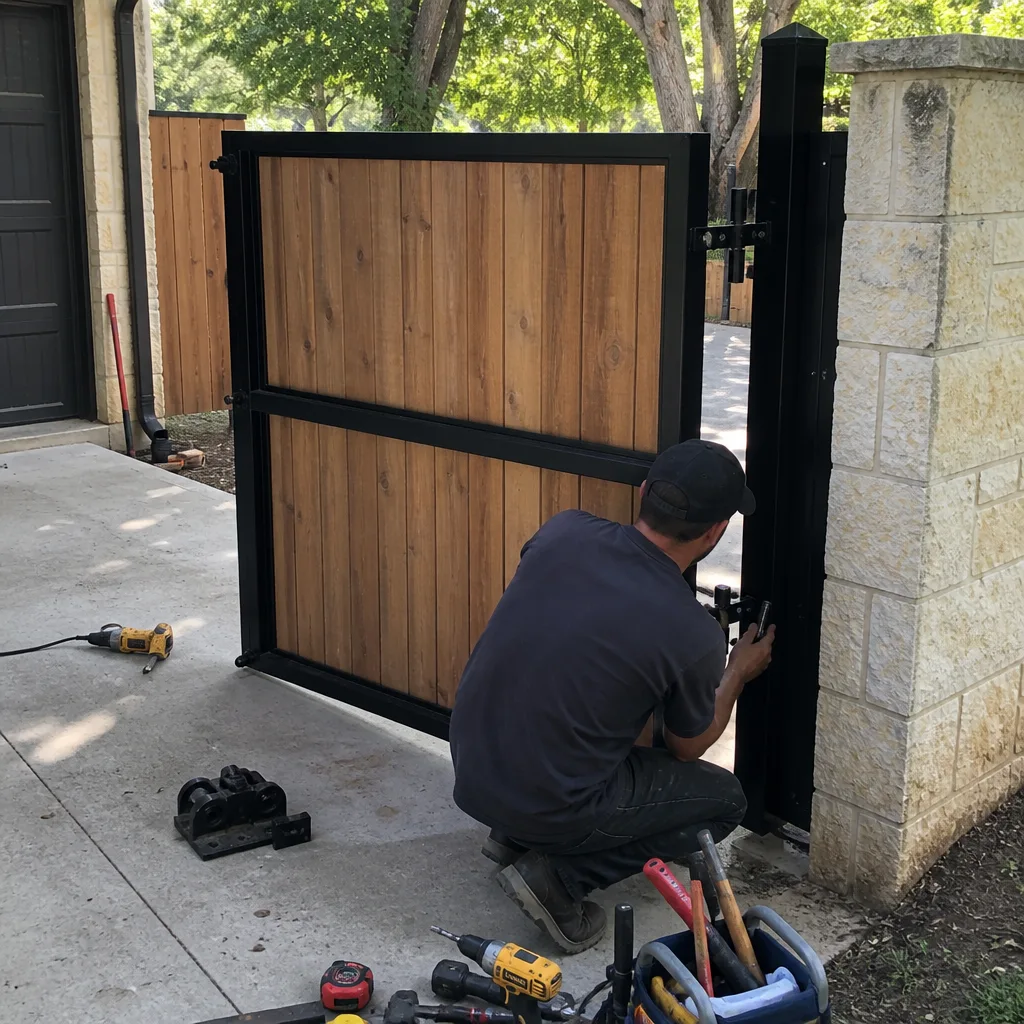 After
AfterGate Repair Warning Signs: A Richardson Homeowner’s Reference Guide
Most driveway gates in Richardson don’t fail all at once. They fail in stages, over weeks or months, and they almost always tell you about it first. A gate that hisses, grinds, hesitates, or sags is not being moody. It’s sending a signal that a $200 repair is coming due, and if you ignore the signal, that $200 repair quietly becomes a $2,500 replacement. This guide walks you through the warning signs we’ve documented in Richardson neighborhoods from Canyon Creek to Reservation, what each sign means, what it costs to fix, and what actually happens if you wait too long.
Quick Answer
The most common gate repair warning signs in Richardson are: a gate that moves slower than it used to, a grinding or scraping sound during operation, visible sagging or dragging on the ground, a motor that runs but the gate doesn’t move, and a gate that reverses direction or stops midway. Any of these five signs means a component is wearing out. Addressing it early typically costs $150 to $400 for a repair. Waiting until the gate stops working entirely typically costs $1,200 to $3,500 for a motor replacement or full frame rebuild.
Table of Contents
- A Gate That Moves Slower Than It Used To
- Grinding, Scraping, or Metal-on-Metal Noise
- Sagging, Dragging, or a Gate That Won’t Latch
- Motor Runs, Gate Doesn’t Move
- A Gate That Reverses Direction or Stops Midway
- Remote or Keypad Problems: The Warning Sign Nobody Watches For
- Your Electric Bill Went Up and You Don’t Know Why
- How Richardson’s Climate Accelerates Gate Wear
- Common Mistakes to Avoid
- When to Call a Professional
- Frequently Asked Questions
- The Bottom Line
A Gate That Moves Slower Than It Used To
A sliding or swinging gate that takes noticeably longer to open or close than it did six months ago is telling you something specific: resistance is building somewhere in the system. The motor is working harder than it should. In Richardson’s clay-heavy soil, we most often trace slow movement to a drive chain that has stretched, wheels or rollers buried in dirt and grass clippings, or a gate frame that has settled out of square. The motor compensates until it can’t, and then it burns out.
Here’s the sequence we see on service calls across Richardson:
- The chain stretches. On sliding gates, the drive chain loosens over time and begins to slip slightly on the sprocket. The gate still moves, but slower.
- The rollers bind. Richardson’s blackland prairie soil shifts with drought and rain cycles. The concrete pad under a sliding gate settles unevenly, the track tilts, and the rollers start fighting the track instead of riding it.
- The motor strains. Every opening cycle now draws more amperage. Heat builds in the windings.
- The thermal overload trips. On a hot Richardson afternoon, the motor shuts itself off mid-cycle. You reset it. It happens again a week later.
- The motor fails permanently. The repair that was a $90 chain adjustment in month one is now an $850 motor replacement in month eight.
What to do: time your gate. Count how many seconds it takes to fully open. If it’s more than 20 to 25 percent slower than it was when installed, have it checked. A chain adjustment, roller cleaning, and track alignment typically runs $150 to $275 in Richardson. A replacement motor for a LiftMaster or FAAC system runs $650 to $1,300 installed. The earlier you catch it, the smaller the invoice. We offer a free second opinion on any written estimate, so if another company quotes a motor replacement and you’re not sure, we’ll look at it before you spend the money.
Grinding, Scraping, or Metal-on-Metal Noise
Every gate makes some sound. A well-maintained gate makes a low hum or a soft mechanical whir. A gate in trouble makes a noise you can hear from inside the house. Grinding, scraping, squealing, or a sound like rocks tumbling in a dryer is never noise to ignore.
Here’s what each sound typically means:
- High-pitched squeal: A bearing is dry or failing. Usually in the wheel, roller, or hinge assembly. Lubrication buys a few weeks. Replacement is the actual fix.
- Deep grinding or growling: The gearbox inside the motor is wearing. Metal shavings are accumulating in the gear housing. This is the sound of a motor actively destroying itself.
- Scraping against the ground or post: The gate is out of alignment and physically dragging. Every cycle shaves more material off the bottom of the gate or the face of the post.
- Rattling or chattering: Mounting bolts have loosened. The motor assembly is vibrating against its bracket. Left alone, the bolts shear and the motor drops.
In our experience across 42 years of gate work, the grinding gearbox is the most expensive sound a Richardson homeowner can ignore. Replacing just the gear set is a $300 to $500 job when caught early. Once the gear set fails completely, the metal debris scores the motor housing and you’re replacing the entire operator at $850 to $1,500. We service BFT and Linear openers with the same familiarity we bring to LiftMaster and FAAC, and we stock gear sets for all of them on the truck. One visit, most jobs. That’s the standard we’ve built the company on.
Sagging, Dragging, or a Gate That Won’t Latch
Sagging is the warning sign Richardson homeowners notice first, because it’s visible. The gate hangs lower than it used to. It drags across the driveway in a shallow arc. The latch no longer lines up with the receiver. Maybe you have to lift the gate by the corner to get it to close at all.
What’s happening: the hinge post has shifted, or the hinges themselves have worn. In Richardson’s expansive clay soil, post shift is common. The soil swells during spring rains and contracts during summer drought. A concrete-gathered gate post that was plumb five years ago can be off by half an inch today. Half an inch at the post translates to two or three inches of sag at the far end of a twelve-foot gate. The gate wasn’t hung wrong. The ground moved under it.
A sagging gate puts stress on everything else. The latch, the receiver, the opener’s limit switches, the hinges. Fixing sag early is a hinge adjustment or a post re-plumb at $200 to $400. Fixing sag late often means welding a new gate frame or replacing the gate entirely, because the dragging has worn a groove in the bottom rail and weakened the welds that hold the frame square. Welding is one of the core services we offer, and a cracked frame weld is a job we complete in one visit.
A gate that won’t latch is a different but related problem. The latch and receiver were aligned when the gate was square. Once sag or hinge wear pulls the gate out of square, the latch misses. In a Richardson home, an unlatched gate is a security gap. The gate looks closed from the street. It is not actually secured. If you can pull it open without the opener, so can anyone else.
Motor Runs, Gate Doesn’t Move
This is a specific failure mode with a specific meaning. You press the remote or the keypad. You hear the motor run. The gate does not move. In the gate trade, this is called “motor runs, no travel,” and it narrows the problem to a short list:
- Broken drive chain or belt: The motor spins. The gate chain has snapped or jumped off the sprocket, so the motion never transfers to the gate itself.
- Sheared drive key: The motor shaft connects to the drive gear through a small metal key. Under enough stress, that key shears off cleanly in two. The motor spins freely. This is common on older LiftMaster and FAAC units that have been working a sagging gate for too long.
- Stripped gear teeth: The plastic or pressed-steel gear inside the operator has worn smooth. The motor turns. The gear it turns no longer engages.
- Failed clutch or pressure release: On hydraulic operators, a failed clutch lets the motor run without engaging the gate. On electromechanical units, a tripped safety release does the same.
The important fact: when the motor runs but the gate doesn’t move, continuing to press the button makes the problem worse. Every activation grinds whatever remains of the stripped gear or sheared key. The gate is not going to start working again on its own, and repeated attempts turn a $250 repair into a full operator replacement.
Our advice for Richardson homeowners: if you hear the motor run and the gate stay put, stop pressing the opener. Disconnect the operator if you know how. Leave the gate in a safe position and call. We carry replacement chains, drive keys, and gear sets for nine opener brands on our service trucks, so a single trip usually resolves it.
A Gate That Reverses Direction or Stops Midway
A gate that starts to open and then reverses, or a gate that stops midway and refuses to continue, is usually tripping a safety sensor or hitting a force limit. Modern gate operators are built to stop and reverse when they detect resistance, because the alternative is crushing a child, a pet, or a car. The safety system is doing its job. The problem is that something is making the gate detect resistance where there shouldn’t be any.
The usual causes in Richardson:
- Track obstruction: Gravel, acorns, a tree root that has lifted the slab, or accumulated dirt. The gate hits resistance, the force sensor trips, and the gate reverses.
- Misaligned photo eyes or safety edges: The infrared sensors at the gate opening have shifted. The sun at a certain angle in a North Texas afternoon can also blind a photo eye. The gate stops because the sensor falsely reports an obstruction.
- Worn limit switches: The opener’s limit switch tells the motor where to stop. When the switch wears, the gate overshoots and binds against the stop post, then reverses off the bind.
- Low battery or failing capacitor: On solar-powered or battery-backup operators, low voltage causes exactly this symptom: the gate starts, the voltage sags, and the motor reverses before completing the cycle.
- Overloaded motor: The same slow-gate strain described earlier eventually triggers the force limits. The motor has been working too hard for too long and the safety system finally says no.
A gate that reverses or stops midway never gets better on its own. The safety sensors and force limits are doing exactly what they were designed to do, and the underlying cause is mechanical or electrical wear. The fix can be as simple as clearing the track and realigning the photo eye, which we handle as a one-visit service call for under $200. Or it can be as involved as a motor replacement. Either way, the gate is telling you plainly that something is wrong. A trained technician can identify which of the five causes it is in under an hour.
Remote or Keypad Problems: The Warning Sign Nobody Watches For
A dying motor announces itself with noise. A failing remote or keypad announces itself with silence, and silence is easy to ignore. Press the button. Nothing. Press it again. The gate opens. You tell yourself the first press was your fault. It was not.
Remote and keypad failures show up in three predictable patterns:
- Decreasing range: You used to open the gate from two houses away. Now you have to be sitting in the driveway with the remote pointed at the receiver. Over time, radio components degrade, the antenna connection corrodes, or the receiver’s sensitivity drifts. This is the early warning.
- Intermittent response: Press once, nothing. Press twice, the gate moves. This can be a failing remote, a receiver with a cold solder joint, or a keypad with corroded contacts. Richardson’s heat and humidity accelerate all three.
- Keypad codes that stop working: One code holds. Another stops. The keypad’s memory is not the problem. Usually there’s a wiring issue between the keypad and the control board, or moisture has gotten inside the keypad housing after a hard rain.
- Clay soil movement: The concrete gate post shifts seasonally. Even a poured footing four feet deep moves with the soil. The gate’s hinges and latch change alignment by a fraction of an inch each year, and over a decade that fraction stacks up into visible sag.
- Heat and sun: Gate control boards, remote housings, and wiring jackets all degrade faster in sustained heat. We replace more circuit boards in August than in any other month. The sun also bakes lubrication out of hinges and bearings.
- Humidity: Unprotected steel develops surface rust in Richardson’s spring humidity. A gate that’s painted and maintained will shrug it off. A gate with chipped paint and bare metal will not.
- Storm debris: Oak leaves, pecan twigs, and hail-damaged roofing granules accumulate in tracks and around rollers. The next heavy rain packs that debris into a paste that hardens in the sun and binds the rollers.
- Greasing a gate that needs a mechanical fix. Spraying lubricant on a sagging gate quiets the scraping for a week and does nothing for the underlying hinge or post problem. The noise returns, the wear continues, and the repair bill grows behind the silence.
- Ignoring a slow gate because it still works. A slow gate is not a quirk. It’s a stranded motor. The resistance that slows the gate down is the same resistance that will eventually kill the operator, and operators are the most expensive single component on the gate.
- Letting a sagging gate drag on the driveway. Dragging doesn’t just wear the bottom rail. It loads the motor, the chain, the hinges, and the welds. A $250 post adjustment in month one prevents a $2,000 frame rebuild in month twelve.
- Repeatedly pressing the opener when the gate doesn’t move. Every activation against a stripped gear or snapped chain destroys what’s left of the drivetrain. Stop pressing. Call. The repair that was a chain replacement stays a chain replacement only if you stop cycling the motor against the break.
- Hiring a generalist for a gate problem. Gate automation is not garage door work and it’s not general welding. A handyman who fixes a gate today and won’t return calls next month leaves you with no guarantee. Our 90-Day Done Right Promise is in writing, on every job, and it means exactly what it says: if it’s not right, we come back and make it right.
- Waiting until the gate is fully broken to call. Failed gates always cost more than failing gates. The motor, gearbox, chain, and frame all fail in sequence. Catch the first failure in the sequence and you pay for one component. Catch the last and you pay for all of them.
The practical risk: a remote or keypad problem never strands you in a considered way. It strands you on a Tuesday morning when you’re already late, or on a rainy night when the code chooses exactly then to stop working. We tell Richardson homeowners the same thing every time: if the remote or keypad is behaving inconsistently, it’s already broken. The intermittent phase is not the problem going away. It’s the problem rehearsing. We service Ghost Controls and Mighty Mule remotes and receivers as readily as the bigger commercial brands, and most keypad or receiver issues are repaired on site, in one visit, without replacement.
Your Electric Bill Went Up and You Don’t Know Why
A driveway gate opener that runs four cycles a day costs about $3 to $6 per month to operate. That’s it. The motor draws power only when it’s moving the gate, and a healthy cycle takes under 20 seconds. So when a Richardson homeowner sees an electric bill that’s $15 or $25 higher every month with no obvious cause, a failing gate operator is on the short list of explanations.
What’s happening: the motor is working against resistance, the same resistance described in the slow-gate section. A strained motor draws more amperage per cycle. But the bigger cost rarely shows up on the monthly bill in a dramatic way. What shows up is the lifespan of the motor, which shortens with every overheated cycle. The real cost of ignoring gate resistance isn’t the $18 a month. It’s the $1,000 operator replacement you didn’t budget for.
There’s a second way a gate raises your electric bill: the operator runs when it should not. A stuck limit switch can leave the motor energized in a stalled position. A failing control board can cycle the motor at odd hours. A relay that arcs and sticks can hold the circuit closed. If your gate is hot to the touch when it has not run for hours, that’s a stalled or energized motor, and it’s a fire risk. Turn off the circuit breaker and call a professional. This is not a job where we walk a homeowner through a multimeter test over the phone. We send a trained technician instead.
How Richardson’s Climate Accelerates Gate Wear
Richardson’s climate is hard on gates in ways that a brochure never mentions. The relevant facts: we get about 39 inches of rain a year, most of it in spring and fall. Summer temperatures routinely cross 100 degrees. Spring and fall bring thunderstorms with straight-line winds. And the soil under every gate in this city is Houston Black clay, which expands when wet and contracts when dry. A gate that was hung square in May will be fighting the ground by August.
Here’s how each element plays out in the life of a gate in Richardson:
Knowing this, a Richardson homeowner who wants a gate that works for twenty years should think in terms of an annual service check, not a repair-on-failure approach. We offer an $89 seasonal tune-up that covers the drivetrain, track and roller cleaning, hinge lubrication, safety-system testing, and a written condition report. It’s a small line item compared to what a failed motor costs. It’s also the single best way to catch a gate that’s about to break, before it breaks.
Common Mistakes to Avoid
When to Call a Professional
Call a professional the first time you notice a change in how your gate sounds, moves, or responds. Not the fifth time. Not when it stops working entirely. The moment the gate does something it didn’t do last month, it’s telling you a component has started to wear. Professional gate repair in Richardson isn’t like waiting out a cold. The problem compounds. If your gate is dragging, grinding, slowing down, reversing without cause, or running when it shouldn’t, the time to call is now. Ironworks Gate Co. offers free estimates in Richardson, and a live person answers the phone 24 hours a day, 7 days a week. Call (903) 627-2906 and tell us what the gate is doing. We’ll tell you honestly whether it needs a technician today or can wait for a scheduled tune-up.
Frequently Asked Questions
Gate repair in Richardson typically costs between $150 and $750 depending on the component. Minor repairs like chain adjustment, roller cleaning, and photo-eye realignment run $150 to $300. Motor gear set replacement runs $300 to $500. Full operator replacement runs $850 to $1,500. A complete gate rebuild or replacement starts around $2,000. These are the ranges we quote across Richardson neighborhoods including Canyon Creek, Duck Creek, and Arapaho Heights. Call (903) 627-2906 for an exact quote; estimates are free, and we offer $50 off any repair over $250.
Yes, most gate repairs are completed in a single visit. We stock chains, drive keys, gear sets, remotes, and receivers for nine opener brands on our service trucks, and most of our Richardson service calls are resolved on the first trip. Call (903) 627-2906 and a live person will schedule your visit; we’ll be there when we say, and the price is agreed before a single bolt is turned.
Yes. We’re trained and equipped to service LiftMaster, FAAC, BFT, Linear, Viking, Ghost Controls, DoorKing, Elite, and Mighty Mule operators. Whatever brand is on your driveway gate in Richardson, we carry the parts for it and we make the correct diagnosis on the first visit. No guessing, no second and third trips while the gate stays broken.
Your gate reverses before opening fully because the force sensor or photo eye is detecting resistance or a false obstruction. The usual culprits in Richardson are track debris, misaligned photo eyes, a worn limit switch, or low battery voltage. The safety system is doing its job; the underlying problem is mechanical or electrical wear and a technician should evaluate it before the component fails completely.
Repair is almost always cheaper than replacement. A gate operator costs $850 to $1,500 new, while most repairs run $150 to $500. A steel gate frame can be re-welded and re-hung for a fraction of replacement cost. The deciding factors are the age and condition of the frame itself. If the welds are sound and the frame is square, repair it. If the frame is rusted through in multiple places or the concrete pad has failed, replacement is the honest recommendation. We provide free second opinions on any written estimate, so you can make that decision with confidence.
We do. Ironworks Gate Co. offers a permanent 5% discount for seniors and veterans on every job, every day, no special request required. We also run an $89 seasonal tune-up that includes drivetrain inspection, roller and track cleaning, hinge lubrication, safety-system testing, and a written condition report. Call (903) 627-2906 to schedule a tune-up or get a free estimate for any repair.
The Bottom Line
Your gate is a mechanical system, and mechanical systems fail in sequence, not all at once. The warning signs covered here - a slow gate, a grinding noise, a sagging frame, a motor that runs without moving the gate, a gate that reverses midway, a remote that works when it feels like it - are all early signals of a component wearing out. In Richardson, the climate and soil accelerate that wear, which makes attention and maintenance more valuable here than anywhere. Catch the signal early and you’re facing a $150 to $400 repair that keeps your gate running for years. Ignore it and you’re facing a $1,200 to $3,500 replacement that could have been avoided. The gate is telling you what it needs. You just have to listen.
Written by Victor Salinas, Owner at Ironworks Gate Co., serving Richardson since 2013.