
Last updated August 25, 2026
Free on-site gate assessment - hinges, posts, and your LiftMaster or Nice gate operator checked before anything is quoted
The assessment is free and the quote is the invoice.
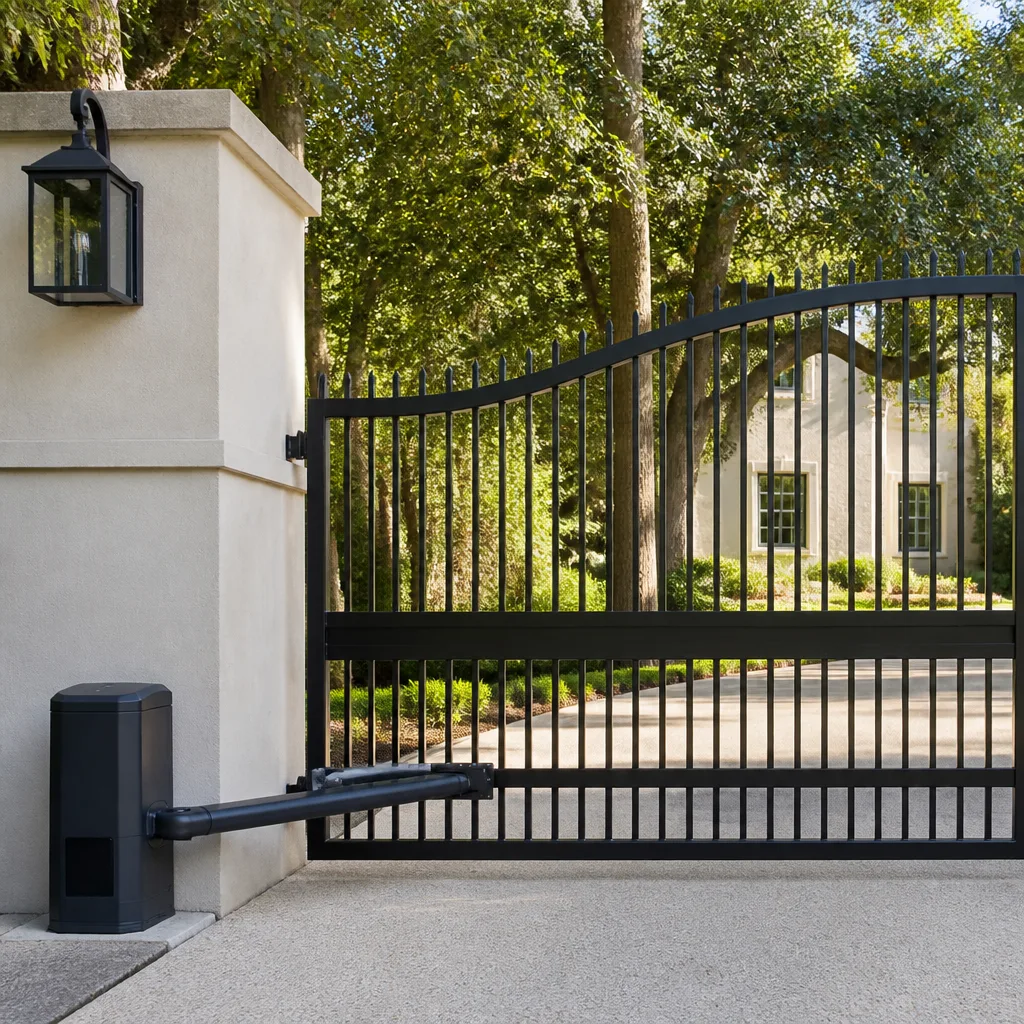
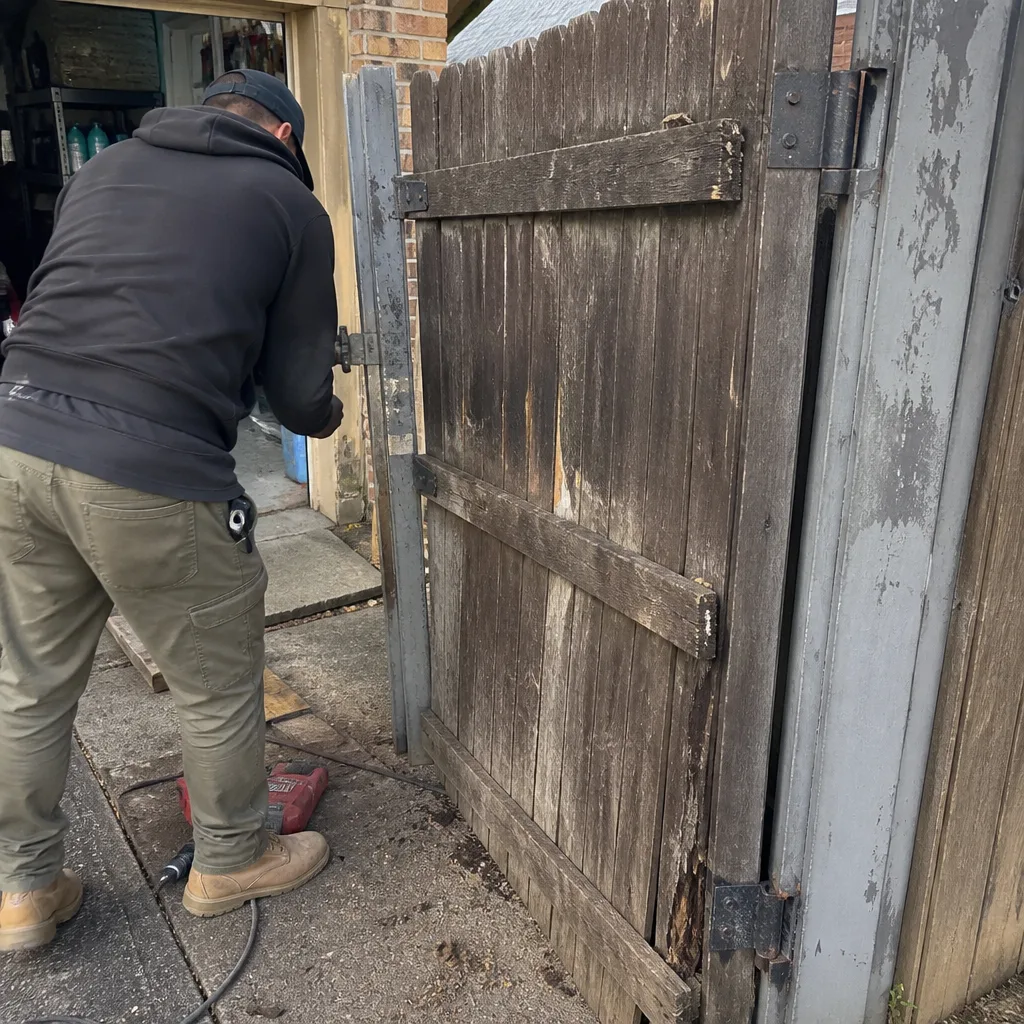 Before
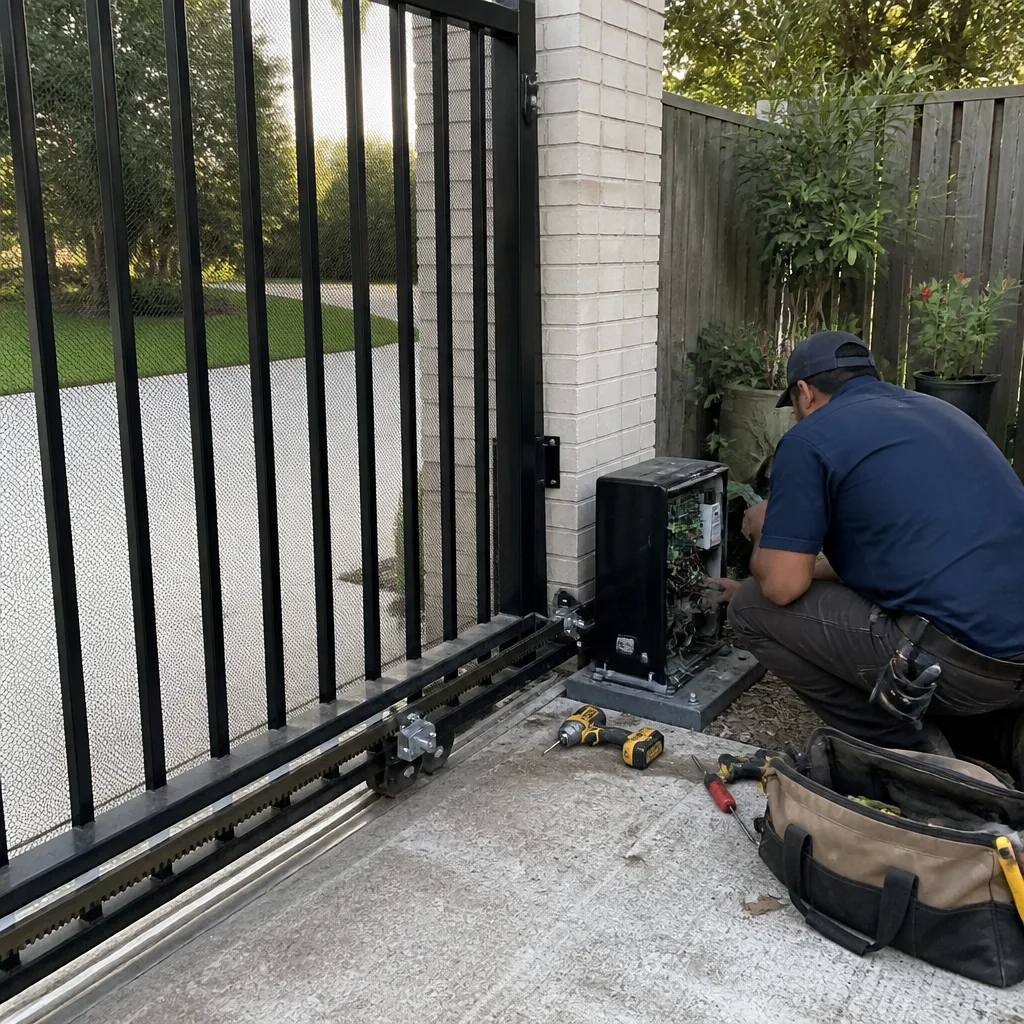 After
After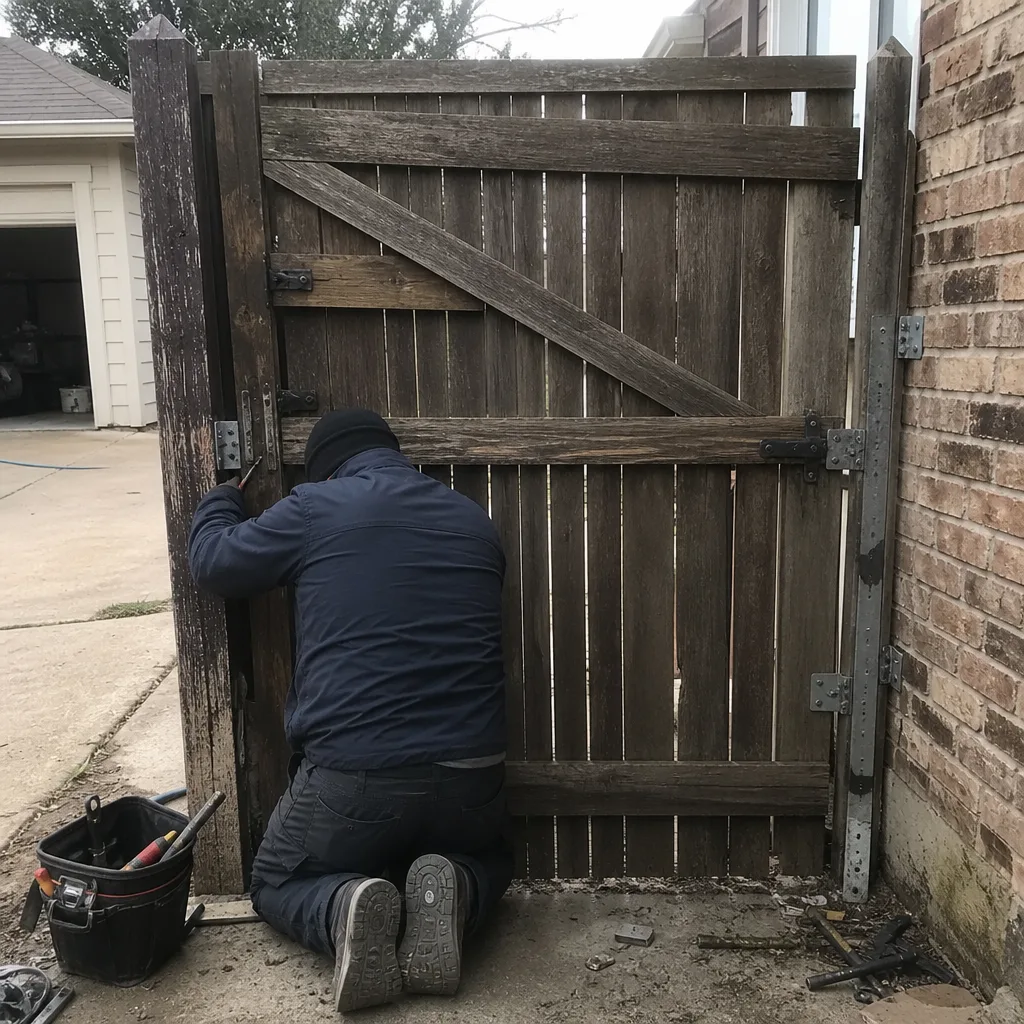 Before
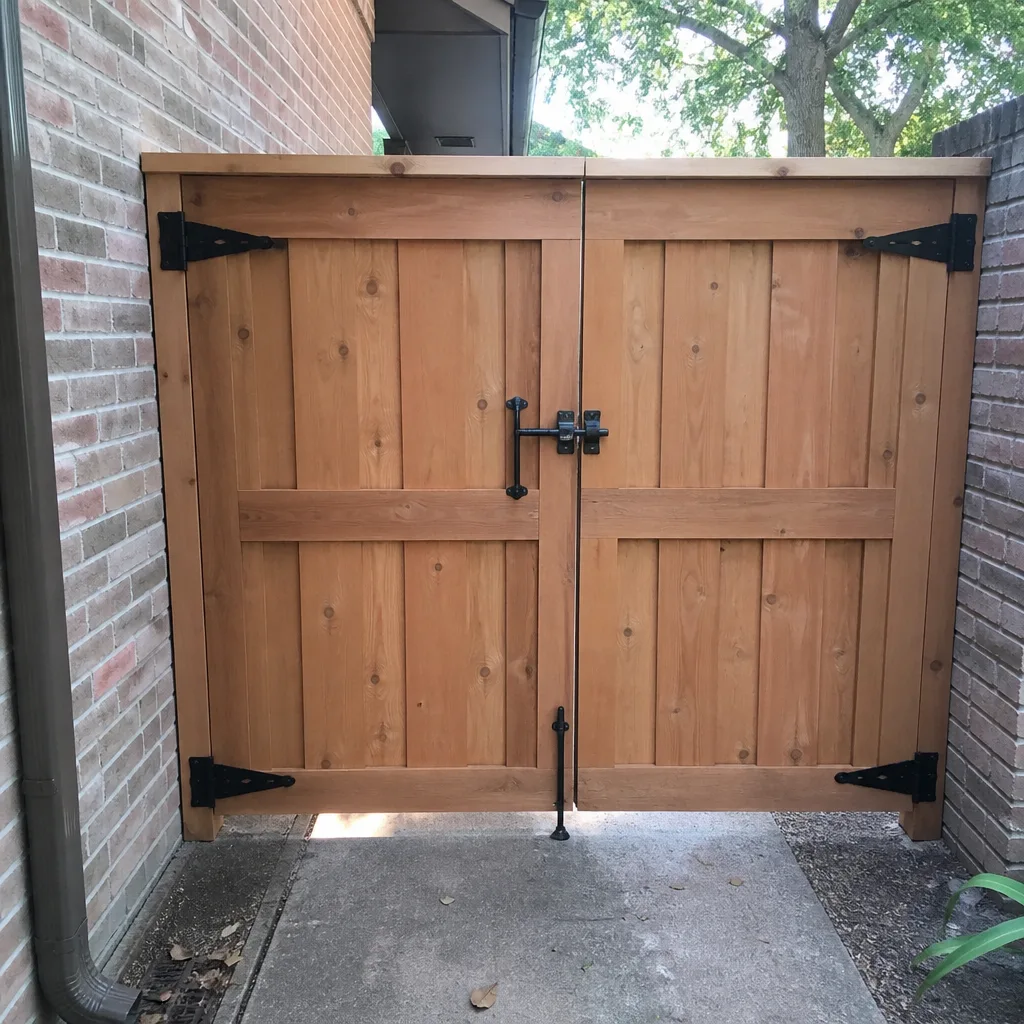 After
After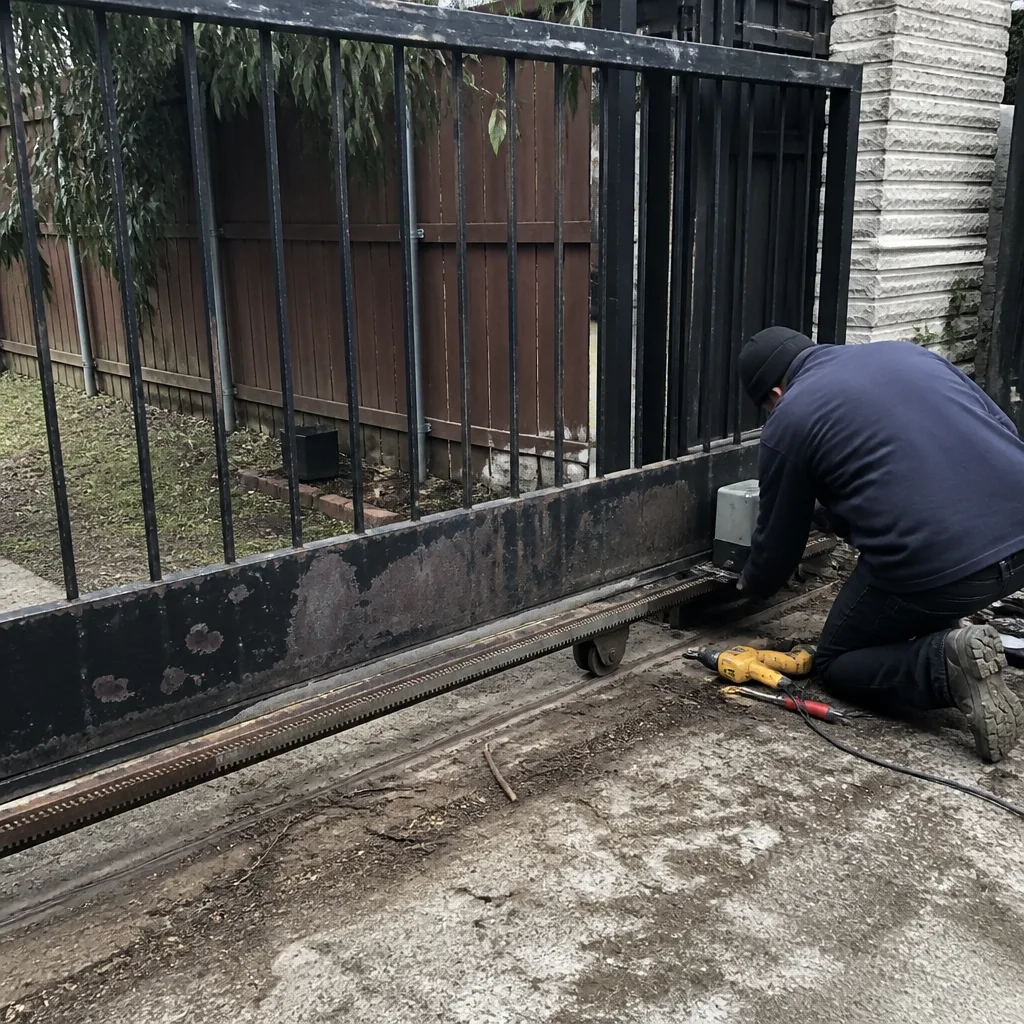 Before
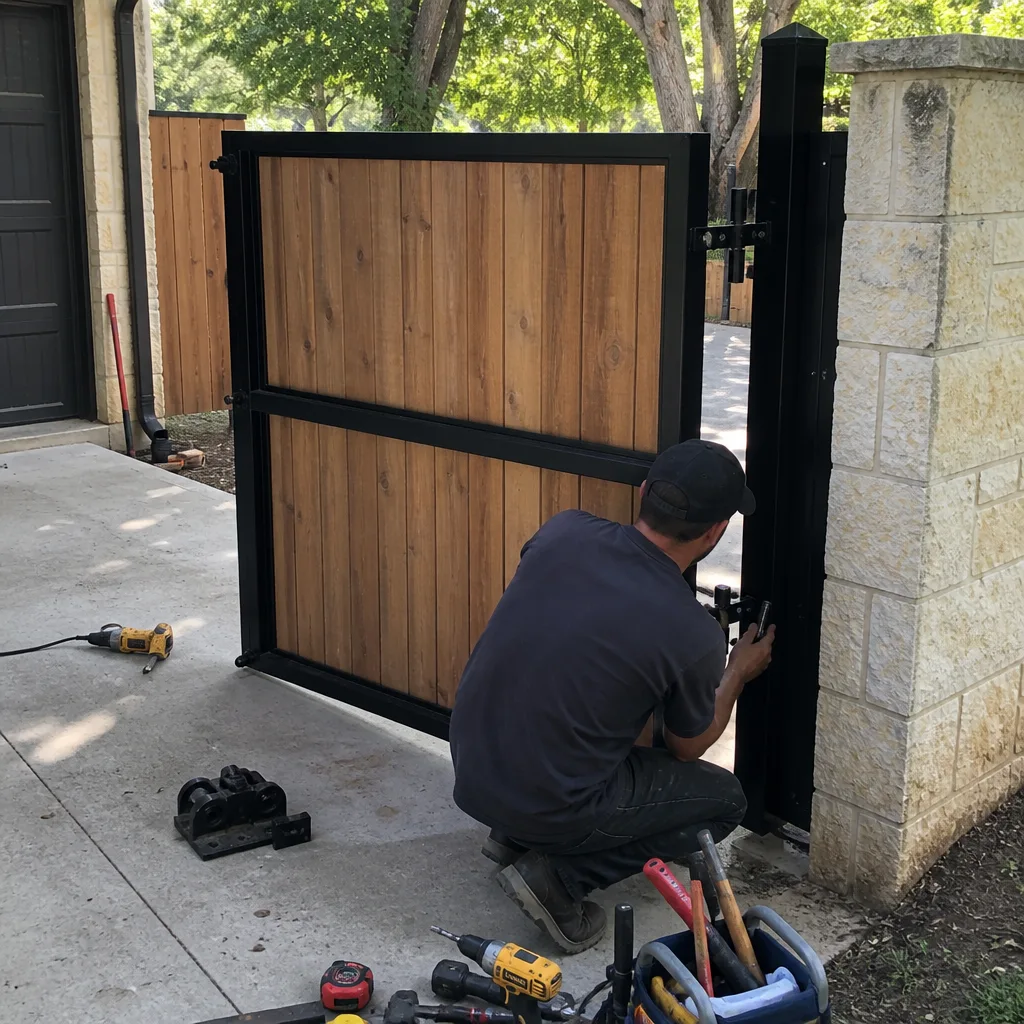 After
AfterGate Repair Maintenance Checklist for Richardson Homeowners
Most Richardson homeowners don’t think about their automatic driveway gate until the morning it refuses to open and the car is stuck in the driveway. That’s an expensive way to learn a simple truth: a gate is a machine with moving parts, and machines in North Texas weather need regular attention. The intense summer heat, the freeze-thaw cycles we get each winter, and the constant wind-blown grit off the prairie all take a toll on hinges, tracks, motors, and circuit boards. This guide gives you a plain-language maintenance checklist you can work through in about an hour, twice a year, plus the warning signs that mean it’s time to call a gate repair professional in Richardson before a small issue becomes a full gate replacement.
Quick Answer
A Richardson homeowner should inspect and maintain their driveway gate twice a year, in spring and fall, focusing on six areas: hinges and pivot points, the track or rollers, the motor and operator arm, safety sensors and edges, the control board and wiring, and the overall level and alignment of the gate itself. Most of this is visual and takes under an hour. When something is binding, grinding, or opening slower than it did last month, that’s a repair issue, not a maintenance issue, and it should be addressed the same week it’s noticed.
Table of Contents
- Why Richardson’s Climate Is Hard on Gates
- The Seasonal Gate Maintenance Checklist
- Hinges, Pivots, and What to Listen For
- Slide Gate Tracks and Rollers: The Grit Problem
- Motors, Operator Arms, and the Summer Heat Load
- Safety Sensors, Photo Eyes, and Safety Edges
- Control Boards, Wiring, and North Texas Lightning
- Steel, Wrought Iron, and Powder Coat: Material-Specific Care
- Common Mistakes to Avoid
- When to Call a Professional
- Frequently Asked Questions
- The Bottom Line
Why Richardson’s Climate Is Hard on Gates
Richardson sits in a climate band that punishes outdoor machinery in three distinct ways. First, the summer heat. From June through September, surface temperatures on a dark-colored metal gate can exceed 140 degrees, which degrades grease in hinges, stresses motor capacitors, and causes thermal expansion that makes a perfectly aligned gate bind against its own frame. Second, the freeze-thaw cycle. Richardson winters rarely stay frozen, but when a cold front hits, moisture seeps into hairline cracks in welds or powder coat, freezes, expands, and slowly widens those cracks year after year. Third, the wind. We get sustained winds that carry fine silt and sand from open ground, and that grit works its way into roller bearings, hinge pins, and track channels. In our experience at Ironworks Gate Co., a gate in Richardson that gets zero maintenance will show noticeable wear within three years, and a gate that gets a twice-yearly checklist will run for fifteen years without a major repair. The difference is not luck. It’s lubrication and observation.
The Seasonal Gate Maintenance Checklist
Run through this list in the spring, after the last freeze, and again in the fall, before the first cold snap. It takes about an hour. You’ll need a flashlight, a clean rag, a can of white lithium grease or a silicone spray, and a notepad.
- Stand at the hinge post and watch the gate open and close fully. Look for wobble, sag, hesitation, or a change in sound. The gate should move smoothly and stop without bouncing. Do this twice, once from each side.
- Check every hinge and pivot point for rust, wear, or play. Grab the gate at the latch side and lift. Any more than a quarter inch of vertical movement means a hinge or bushing is worn and needs attention before the gate drags.
- Inspect the track, if it’s a slide gate. Remove leaves, dirt, and any debris from the track channel. Look for dents, cracks, or loose track bolts. Run your hand along the top edge of the rail to feel for burrs or corrosion.
- Clean and lubricate the hinge pins and roller bearings. Wipe the old grease off first, then apply a small amount of white lithium grease. Do not over-grease; it attracts grit. Two pumps per hinge is plenty.
- Test the safety features. Place a cardboard box or a trash can in the gate’s path and close the gate. It should stop and reverse. If it doesn’t, stop using the automatic opener immediately and call a professional.
- Look at the operator arm and the chain or belt. Check for sag, rust, or a dry chain. A chain on a slide gate should have no more than half an inch of vertical play at its midpoint.
- Inspect all visible wiring and the control board enclosure. Look for chewed insulation, loose connections, ant nests, spider webs, or signs of moisture inside the box.
- Check the gate’s finish. Look for scratches, chips, or rust spots in the powder coat or paint. Touch up chips before winter moisture gets into the steel.
- Note anything that looks different from last season. Write it down. Small changes are the early warning system for big repairs.
If you’d rather have a professional go through this list with you, Ironworks Gate Co. offers an $89 Seasonal Tune-Up for Richardson homeowners that covers lubrication, alignment checks, safety system testing, and a written condition report. It’s the same checklist, done with the right tools and a trained eye, and it includes the same 90-Day Done Right Promise we put on every job.
Hinges, Pivots, and What to Listen For
The most common gate failure in Richardson is not a dead motor. It’s a hinge that wore out quietly and transferred the weight of the gate onto the operator, which then burned itself out trying to move a gate that was slowly sagging into the ground. Hinges fail in stages, and each stage makes a sound. A healthy hinge is quiet. A hinge that needs grease will squeak. A hinge with a worn bushing will make a lower groaning sound. A hinge that’s about to fail will make a creaking, grinding noise, and you’ll see the gate visibly sag at the latch end. The fix for a squeaky hinge is ten minutes of work and a few dollars of grease. The fix for a failed hinge is a repair call, possibly a re-weld, and sometimes a new gate leaf. In Richardson’s freeze-thaw conditions, the window between “squeaky” and “failed” can be measured in months, not years. Our technicians at Ironworks Gate Co. replace hinge bushings on Richardson gates more often than any other single part except safety photo eyes.
What to do: Twice a year, lift the gate at the latch end and look for play at the hinge pin. If you see movement, the bushing is worn. Clean the hinge pin with a rag, remove any rust with fine steel wool, apply white lithium grease, and re-test. If the play doesn’t go away after greasing, the hinge needs replacement. Don’t wait for the groaning sound. By then, the gate leaf is putting lateral stress on the post, and in clay-heavy Richardson soil, a shifting hinge post means a much bigger job.
Slide Gate Tracks and Rollers: The Grit Problem
Richardson has a slide-gate problem, and it’s the wind. The flat, open terrain around the city means fine dust and grit blow constantly, and a slide gate’s track is basically a collector tray for everything the wind carries. Grit in the track gets pulverized under the rollers, and over time it grinds flat spots into the wheels, wear grooves into the rail, and puts excessive drag on the motor. We’ve seen slide gates in Richardson neighborhoods like Canyon Creek and Reservation where the track was so packed with compacted dirt and decomposing leaves that the motor was pulling double its rated amperage just to move the gate. That’s how motors die young.
What to do: Every spring and fall, clear the track by hand or with a brush. A leaf blower works for loose debris, but compacted dirt needs a flathead screwdriver or a putty knife to break up. Once the track is clean, inspect the top surface of the rail for wear grooves or pitting. Run a finger along the rail and feel for burrs. A smooth rail is fine. A rough or grooved rail is a sign the rollers are worn, and running worn rollers on a grooved rail accelerates the damage. Lubricate the roller bearings with a small shot of white lithium grease, but keep grease off the top rail surface itself. Grease on the contact surface just creates a paste with the grit, and paste is worse than dry grit.
Motors, Operator Arms, and the Summer Heat Load
Automatic gate motors are rated to operate within a temperature range, and Richardson’s July and August afternoons push those ratings hard. A motor that lives in a black metal box bolted to a black metal gate in full Texas sun can reach 150 degrees internally. Heat degrades the motor’s capacitors and insulation slowly, which is why a motor that ran fine in May might start tripping its thermal overload in August. This is not a sign the motor is about to fail catastrophically. It’s a sign the motor is working too hard, usually because the gate itself has developed drag from a hinge, track, or wheel issue. The motor is the symptom, not the disease.
What to check: If your gate opens slower on hot afternoons than it does in the cool of morning, that’s thermal expansion in action, but it’s also a clue that something is binding. Check the chain or belt tension. A chain that’s too tight puts constant load on the motor bearings. A chain that’s too loose slaps and jerks. Check the operator arm connection points for worn bushings or loose bolts. And make sure nothing has grown into the gate’s swing path. In Richardson, crepe myrtles, photinia, and fast-growing shrubs love to lean into a gate’s swing radius, and a gate that drags through foliage every cycle is a motor that’s quietly roasting itself. If your opener is a LiftMaster, FAAC, BFT, or Linear unit, the maintenance basics are the same, but the diagnostic codes are not. We service all four, and many others, and the most common service call we get in August is a gate that opens fine in the morning and stops working after 2 p.m. It’s almost always a thermal trip caused by mechanical drag.
Safety Sensors, Photo Eyes, and Safety Edges
A driveway gate is a moving vehicle-sized object, and the safety systems on it are not optional. The two primary safety devices on a modern automatic gate are the photo eyes, also called safety beams, and the safety edges, which are pressure-sensitive strips on the leading and trailing edges of the gate. In Richardson, three things kill photo eyes more than anything else: ants, irrigation sprinklers, and misalignment. Ants like to nest inside the warm photo eye housings. Sprinkler overspray corrodes the terminals. And a bump from a car tire or a yard crew string trimmer can knock a photo eye out of alignment just enough to trick the system into thinking something is in the path, which makes the gate refuse to close.
Important: Never attempt to bypass or jumper a photo eye or safety edge to force a gate to close. A gate that closes on a person or pet because a safety sensor was defeated is a liability no homeowner in Richardson wants to carry, and a serious injury is the most expensive gate repair there is. If you suspect a safety sensor issue, check the obvious things first: make sure the lens on each photo eye is clean, make sure the small indicator light on each eye is lit and steady, and make sure nothing has grown or drifted in front of the beam. But if a sensor is faulty, leave it to a trained gate technician. This is one component where the correct fix is almost never a DIY fix.
Safety edges are simpler but no less important. Run your hand along the edge strip and feel for cracks, brittleness, or areas where the internal switch has gone flat and unresponsive. A safety edge exposed to full Richardson sun for ten years will eventually become rigid and unresponsive. When it doesn’t compress and signal the control board to stop, the gate will keep pushing against anything in its path.
Control Boards, Wiring, and North Texas Lightning
Richardson sits in the northern edge of Texas’s spring storm corridor, and the lightning load here is significant. A nearby strike doesn’t have to hit your gate directly to damage it. Voltage surges travel through the ground and into low-voltage wiring, and the control board on a gate operator is packed with components that fail at voltages far lower than what a nearby strike can induce. The most common lightning-related failure we see at Ironworks Gate Co. is a control board that works intermittently after a storm: the gate will open but not close, or close but not reverse, or the remote receiver will work one day and not the next. Intermittent behavior after a storm is almost always board damage, not a mechanical problem.
What to check: After any significant storm, open the control board enclosure and look for signs of moisture intrusion, blown fuses, scorch marks, or a burnt smell. Tighten any loose terminal screws. Look at the low-voltage wire run for damaged insulation, especially where the wire enters the ground or passes through conduit. Raccoons, squirrels, and rats all chew low-voltage wire insulation, and exposed copper wire in wet Richardson soil is a recipe for corrosion and phantom faults. If you have a surge protector on the gate’s power supply, check that its indicator light is still on. If you don’t have one, consider it. A good surge suppressor is a lot cheaper than a new control board for a LiftMaster or BFT operator.
Steel, Wrought Iron, and Powder Coat: Material-Specific Care
Most Richardson driveway gates are either steel or aluminum with a powder coat finish, or older wrought iron. Each material has a different failure mode, and the maintenance differs. Powder-coated steel is the standard for modern gates, and its weak point is any scratch or chip that goes through the coating to bare metal. Bare steel in Richardson’s humid spring and fall weather will rust within weeks. The fix is simple: sand the spot lightly, hit it with a rust-inhibiting primer, and touch up with a matching paint. Do it in the fall before winter moisture, and again in the spring after hail season. Wrought iron gates, common on older Richardson properties from the 1960s and 1970s, are tougher but more brittle, and they rust from the inside out at the joints. Look closely at every weld joint and scroll connection for rust blooms. Surface rust is manageable. Deep flaking rust means the metal has lost structural section, and that’s a welding repair, not a painting job.
Aluminum gates don’t rust, but they oxidize, and the white powdery corrosion that forms on bare aluminum is not harmless. Aluminum’s other weakness is fatigue: aluminum welds crack from repeated flexing. Check every weld joint on an aluminum gate for hairline cracks. A crack today is a broken gate leaf next year. Any crack found early is a simple weld repair. Any crack found late is a gate replacement.
Common Mistakes to Avoid
- Using WD-40 on hinges and rollers. WD-40 is a water displacer, not a lubricant. It cleans and then it evaporates, leaving the hinge drier than it started. Use white lithium grease or a silicone lubricant rated for outdoor use.
- Ignoring a slow gate. A gate that opens 20 percent slower than it did six months ago is telling you something mechanical is changing. Healthy gates don’t slow down. The longer the drag continues, the hotter the motor runs, and heat is what kills motors in Richardson.
- Pressure-washing the control box. A pressure washer forces water past gaskets and into places it should never go. Hand-wash the gate, and keep water away from the operator, control board, and any electrical enclosures.
- Lubricating the track rail itself. Grease on the top of a slide gate rail mixes with Richardson’s wind-blown grit into an abrasive paste that wears the rollers faster. Lubricate the roller bearings only, and keep the rail dry and clean.
- Tightening a sagging gate instead of fixing the hinge. When a gate sags, some homeowners adjust the latch or shim the post to make it close. This masks the worn hinge and transfers the load to the operator. Fix the hinge, not the symptom.
- Forgetting the safety edges and photo eyes. Many homeowners test the gate’s opening and closing but never test the safety reverse. A gate that doesn’t reverse on contact is a liability, and in a family neighborhood in Richardson, it’s a matter of time before it matters.
- Letting sprinklers hit the gate or operator. Richardson irrigation systems are a major source of premature gate corrosion and photo eye failure. Adjust sprinkler heads so they don’t saturate the gate hardware twice a week, year after year.
When to Call a Professional
Some gate maintenance is DIY. Some is not. Call a professional if you notice any of these: the gate sags more than a quarter inch when you lift it at the latch end, the motor hums but the gate doesn’t move, the gate reverses for no reason, the remote works intermittently, the photo eye indicator lights are off or flashing, a hinge is cracked or a weld is broken, or you’ve seen rust bloom through powder coat in multiple places. And always call a professional if the gate has made contact with a person, pet, or vehicle, even if it appears to work fine afterward. Impact damage hides inside the operator and the control board. Ironworks Gate Co. offers free estimates in Richardson. Call (903) 627-2906 and a live person will answer, day or night.
Frequently Asked Questions
Gate repair in Richardson typically runs $150 to $450 for common fixes like hinge replacement, track cleaning and realignment, photo eye replacement, or limit switch adjustment. More involved repairs, like a new control board or a motor replacement, range from $400 to $1,200 depending on the operator brand. At Ironworks Gate Co., the price is quoted and agreed before any work starts, and we offer $50 off any repair over $250. For an exact quote on your gate, call (903) 627-2906; estimates are free.
Twice a year is the right cadence for Richardson’s climate: once in the spring after the last freeze, and once in the fall before the first cold snap. Each session takes about an hour and covers hinges, track, rollers, safety systems, and electrical connections. If you’d rather not do it yourself, Ironworks Gate Co. offers an $89 Seasonal Tune-Up that includes the full checklist and a written condition report.
That pattern almost always points to thermal overload in the motor or control board. Richardson’s summer afternoon heat pushes the motor’s internal temperature past its limit, and the thermal protection shuts it down until it cools. The root cause is usually mechanical drag from a worn hinge, a dirty track, or a misaligned gate that forces the motor to work harder than it should. A technician can diagnose which part is dragging and fix it before the motor is permanently damaged.
Yes, in most cases. Our technicians carry parts for the most common gate repairs, including hinge bushings, photo eyes, limit switches, and cap kits, so most single-gate repair calls in Richardson are completed in one visit. If a part is unusual or brand-specific, we’ll order it and return promptly. Call (903) 627-2906 and tell us what your gate is doing; we’ll give you an honest answer about timing before we schedule anything.
A squeak is maintenance. A groan, grind, or metallic creak is repair. Squeaking comes from dry hinge pins and responds to grease within minutes. Groaning and grinding come from worn bushings, flat-spotted rollers, or a failing bearing, and grease won’t cure them. In Richardson’s climate, a noisy gate left alone will get worse quickly, especially in the wet spring. Call (903) 627-2906 if greasing doesn’t quiet it immediately.
Our technicians are trained and equipped on nine gate-automation brands, including LiftMaster, FAAC, BFT, and Linear, plus Viking, Ghost Controls, DoorKing, Elite, and Mighty Mule. Whatever opener is on your Richardson driveway, we’ve likely worked on it. A free second opinion on any written estimate is available, and every repair carries our 90-Day Done Right Promise.
The Bottom Line
A driveway gate in Richardson is a long-term investment that lasts fifteen years or more with basic care, and less than five without it. The checklist is short: inspect hinges, clean the track, lubricate the bearings, test the safety reverse, check the wiring, and touch up any chips in the finish. Do it every spring and fall. When something makes noise, slows down, or stops working, act the same week. The gate is a machine, and machines respond to attention. If you don’t want to do the maintenance yourself, Ironworks Gate Co. has been serving Richardson homeowners for over 42 years with the same approach: the right fix, the first visit, at a price you agree to before we start. Call (903) 627-2906 for a free estimate, and we’ll be there when we say.
Written by Victor Salinas, Owner at Ironworks Gate Co., serving Richardson since 2013.